


What is tissue paper? Essential for professional packaging
More than 80 percent of professional packagers choose tissue paper for its unique balance of softness, strength, and environmental friendliness. Whether protecting jewelry in a Paris boutique or showcasing luxury products in Dutch gift shops, this material stands out for its flexible properties. Discover how a careful tissue paper production process creates a versatile packaging solution that combines visual appeal with practical protection.
Table of contents
- Definition and production of tissue paper
- Distinguishing different types and qualities
- Features and benefits of use
- Applications in retail and gift packaging
- Environmental friendliness and recycling options
Key points
| Point | Details |
|---|---|
| Tissue paper production process | Tissue paper is produced using a specialized paper machine and is characterized by a crinkled surface due to the use of a large Krepp cylinder. |
| Quality differences | There are different quality levels; recycled tissue paper and cellulose-based paper offer unique properties for specific applications. |
| Retail Applications | Tissue paper protects delicate products and enhances brand experience in various sectors such as fashion, jewelry, and cosmetics. |
| Sustainability | Modern tissue paper production focuses on recycling and environmentally friendly practices, contributing to a circular economy. |
Definition and production of tissue paper
Tissue paper is a lightweight, soft paper product characterized by its unique production process and versatile properties. Tissue paper production begins with a specialized paper machine that uses a large Krepp cylinder, giving the paper its characteristic crinkled surface.
The production process is exceptionally precise: paper layers are dried within hundredths of a second at extremely high temperatures of around 460°C. This results in a paper product with a typical weight between 15 and 30 grams per square meter, making it ideal for numerous packaging and decorative purposes.
Production features of tissue paper include:
- Extremely light weight
- High degree of flexibility
- Soft and supple texture
- Possibility of different finishes and colors
The technology behind tissue paper makes it suitable not only for professional packaging but also for decorative and protective applications in various industries. The unique production method creates a product that is soft, strong, and versatile.
Distinguishing different types and qualities
Tissue paper comes in various quality levels and grades specifically designed for a variety of professional applications. The diversity of material compositions plays a crucial role in selecting the right type for specific packaging or decorative needs.
The key differentiators for tissue paper are the fiber composition , with two main categories: paper made from recycled materials and paper made from virgin wood fibers. Recycled tissue paper is made from 100% recycled waste paper, while cellulose-based paper is made from fresh wood fibers.
Quality features of tissue paper include:
- Fiber length (affects strength and absorption capacity)
- Material composition
- Weight distribution
- Degree of translucency
- Mechanical properties
For professional packagers, it's essential to carefully evaluate the specific properties of each tissue paper type. The right choice depends on factors such as the desired level of protection, aesthetic requirements, and the specific application within the packaging or presentation context.
Features and benefits of use
Tissue paper stands out for its unique properties, making it indispensable for professional packaging and protective applications. The benefits of tissue paper go beyond mere aesthetic considerations and go to the heart of functional protection and presentation.

The fiber composition plays a crucial role in the quality of tissue paper. Cellulose-based varieties have longer fibers, resulting in higher tensile strength and superior absorbency. Recycled varieties typically have shorter fibers and require additional binders, which can impact overall performance.
Key benefits of tissue paper:
- Excellent protective properties for vulnerable products
- High degree of flexibility
- Minimum weight with maximum protection
- Possibility of customization in color and texture
- Eco-friendly options available
For professional packagers, tissue paper is more than just a filling material. It functions as a precision instrument that protects and presents products, while simultaneously adding aesthetic value to any packaging solution.
Applications in retail and gift packaging
Tissue paper plays a crucial role in the retail and gift industry, where presentation and protection go hand in hand. Industrial gift packaging requires a precise approach, and tissue paper is more than just a filling material.
In retail, tissue paper is used strategically for various purposes. It protects delicate products like jewelry, cosmetics, and electronics during transport and presentation. Moreover, it creates a luxurious and professional look that enhances brand experience.
Applications in various retail sectors:
- Clothing stores: protecting and presenting delicate garments
- Jewelers: individual packaging of jewelry and watches
- Cosmetics stores: hygienic and attractive packaging of make-up and skin care products
- Electronics stores: protecting vulnerable devices
- Gift shops: creating attractive gift packaging
For professionals, tissue paper is a versatile tool that combines functionality with aesthetic value, giving every product a memorable packaging experience.
Environmental friendliness and recycling options
Tissue paper is rapidly evolving in terms of environmental friendliness, with an increasing focus on sustainable production processes and recycling options. Recycling packaging materials is no longer an option, but a necessity for responsible business practices.
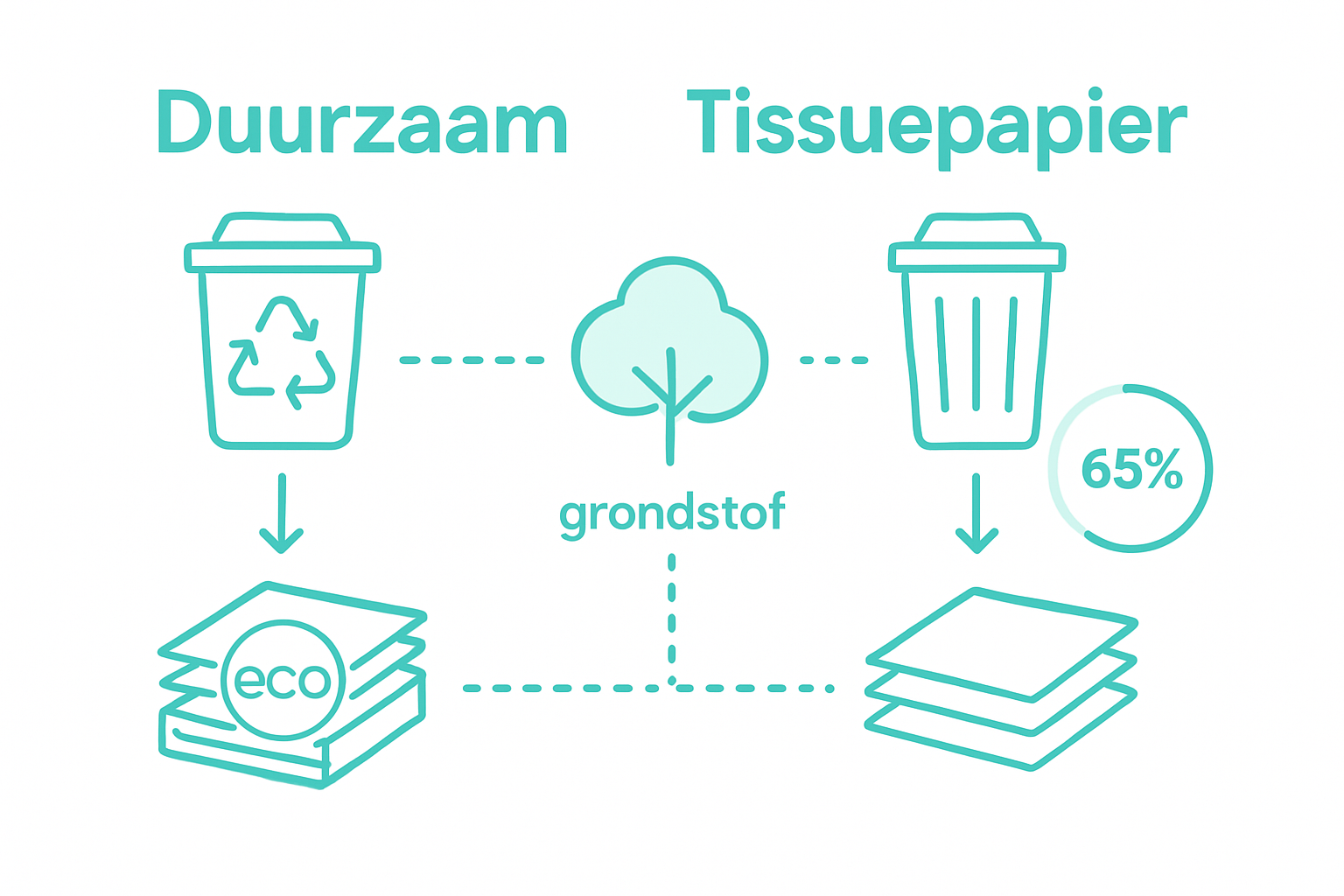
The life cycle analysis of tissue products shows that both pure cellulose and recycled versions have significant environmental implications. Modern production methods are increasingly focused on minimizing environmental impact through more efficient recycling processes and more sustainable raw material choices.
Sustainability aspects of tissue paper:
- Possibility of 100% recycling
- Use of recycled fibers
- Reduction of forestry pressure
- Lower CO2 emissions during production
- Limiting waste flows
For professional users, this means an opportunity not only to choose high-quality packaging materials, but also to consciously contribute to a more circular economy.
Discover the Power of Tissue Paper for Professional Packaging
Professional packaging requires a careful selection of materials that combine protection, aesthetics, and sustainability. This article explains how tissue paper, thanks to its unique properties such as lightweight, flexibility, and eco-friendly options, is essential for protecting delicate products and creating an attractive presentation. Whether you're looking for soft, strong tissue paper varieties or environmentally conscious packaging solutions, choosing the right tissue paper makes all the difference in customer experience and product safety.
For those looking for the best tissue paper in retail, gift wrapping, or industrial applications , Kadopapier.net offers a wide range of high-quality packaging materials. From various types of tissue paper to matching accessories like ribbons and gift bags, you'll find everything you need to make every package professional and distinctive. Don't wait any longer and experience for yourself how our packaging solutions can elevate your products. Visit Kadopapier.net now and discover our quality and service.
Want to learn more about using tissue paper and matching packaging materials effectively for your business needs? Read the practical tips and trends on our blog and transform your packaging process today with tissue paper and other essential packaging items. Choose consciously and package with impact.
Frequently Asked Questions
What is tissue paper?
Tissue paper is a lightweight, soft paper product produced using a special technique that gives it a crinkled surface. It is ideal for packaging and decorative applications.
What are the benefits of using tissue paper in packaging?
Tissue paper offers excellent protection for delicate products and is highly flexible. It is also lightweight and can be produced in a variety of colors and textures, adding aesthetic value to packaging.
What types of tissue paper are there and how do they differ from each other?
There are different types of tissue paper, generally divided into products made from recycled materials and new wood fibers. Recycled tissue paper is made from 100% waste paper, while cellulose-based paper is made from fresh wood fibers, which affects its strength and absorbency.
How sustainable is tissue paper and what are the recycling options?
Tissue paper is often 100% recyclable, and options using recycled fibers are available. Modern production methods are focused on minimizing environmental impact, making tissue paper an eco-friendly choice.