


Satin Ribbon: Everything You Need to Know
Did you know that satin ribbon is chosen for luxury gifts up to 70 percent more often than other types of ribbon? That shiny, silky-smooth look instantly captures the imagination and adds a special touch to any packaging or decoration. Discover the origins of this charm, how satin ribbon is made, and the qualities that make it so special for creatives and professionals.
Table of contents
- What is satin ribbon and how is it made?
- Types of satin ribbon and their differences
- Key Features and Applications
- Advantages and possible disadvantages of satin ribbon
- Satin ribbon alternatives and comparison
Important Points
| Point | Details |
|---|---|
| Choice of materials | Satin ribbon can be made from silk, polyester, or blended fibers, with each option offering unique properties suitable for different applications. |
| Applications | The ribbon is often used in decoration, gift wrapping and fashion, thanks to its luxurious appearance and versatility. |
| Advantages and Disadvantages | Satin ribbon offers an elegant look and is soft to the touch, but it is also delicate and requires special care. |
| Alternatives | For specific needs, materials such as organza, grosgrain and taffeta can offer a good alternative with different aesthetic and functional properties. |
What is Satin Ribbon and How is it Made?
Satin ribbon is a luxurious decorative material with a unique sheen and soft texture that sets it apart from other ribbon types. Mondaymerch describes it as a smooth, lustrous fabric characterized by an elegant appearance and silky quality.
The production of satin ribbon is a fascinating process that revolves around a specific weaving technique. According to Mondaymerch, it's made by weaving together long-filament fibers such as silk, nylon, or polyester in a unique way. The result is a fabric with a distinctive feature: one side has a smooth, shiny surface, while the other is more opaque and less reflective.
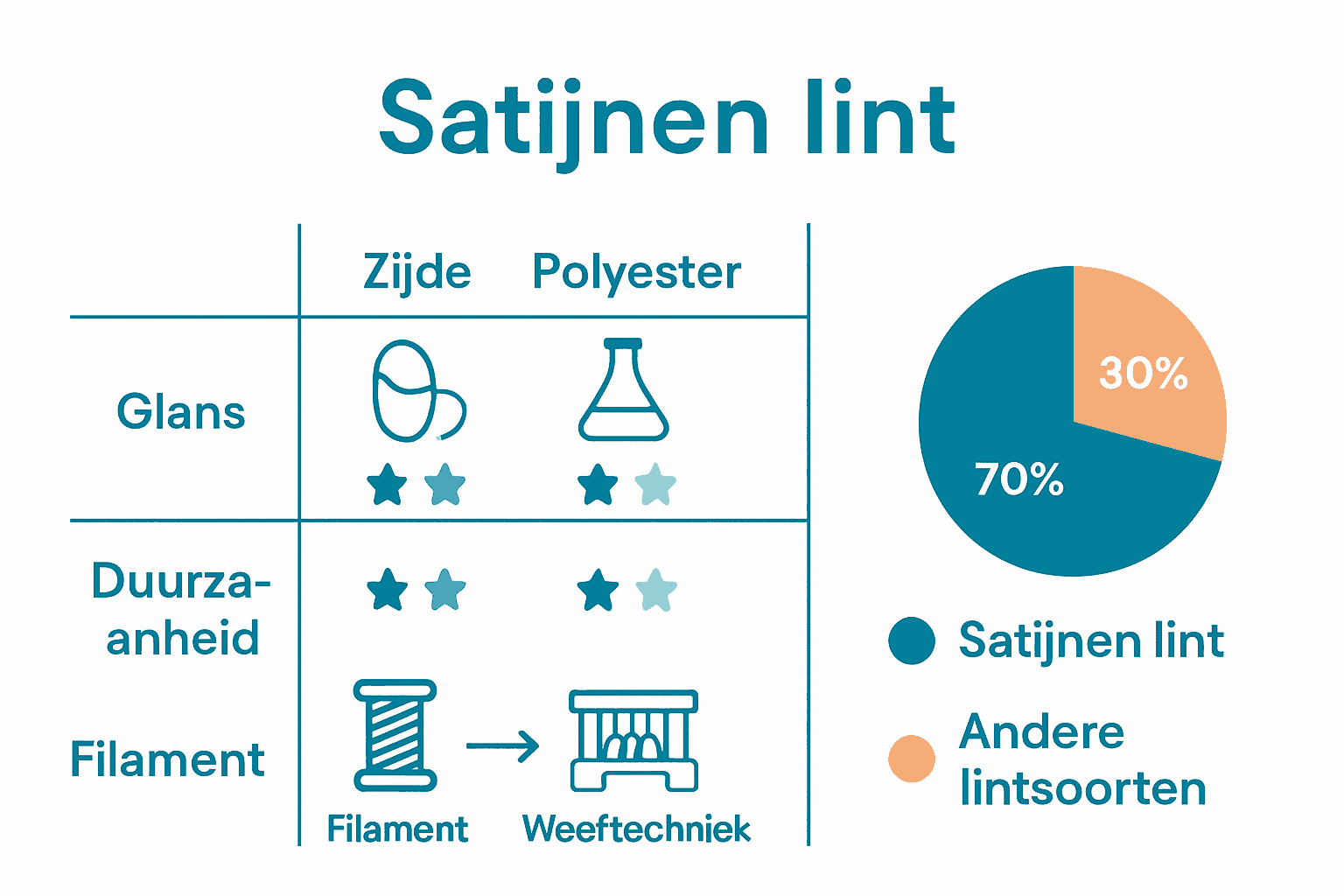
The most common materials for satin ribbon are:
- Silk: the original and most luxurious option
- Polyester: cheaper and more sustainable
- Mixed fibers: combines the best properties of different materials
Satin ribbon is widely used in a variety of applications, from decoration and gift wrapping to fashion and bridal wear. Its glossy finish makes it a popular choice for decoration and packaging projects .
Types of Satin Ribbon and Their Differences
Satin ribbon is available in various grades, each with unique properties suitable for specific applications. The main varieties are determined by the material, width, and finish.
The main material types for satin ribbon are:
- Silk : The most luxurious variant with a natural shine and soft feel
- Polyester : Synthetic material that is cheaper and more durable
- Mixed fibers : Combines the best properties of different materials
Satin ribbon is available in practically any width, ranging from narrow ribbons just a few millimeters to wide ribbons of up to 10 centimeters. Ribbon for decorative and packaging projects is often chosen based on the specific application.
The finishing quality of satin ribbon is also crucial. There are smooth, glossy ribbons with a perfect finish, and matte varieties with a more subdued look. Professionals carefully select their ribbon based on the desired visual and tactile properties for their specific project.

Here's an overview of the main types of satin ribbon and their properties:
| Material | Gloss | Sustainability |
|---|---|---|
| Side | Very high | Average |
| Polyester | High | Very good |
| Mixed fibers | High/normal | Good |
Key Features and Applications
According to Mondaymerch, satin is a fabric with unique properties that set it apart from other materials. Its most striking features are its smooth texture and luxurious sheen, which make it so unique.
The main features of satin ribbon include:
- Glossy surface : Creates an elegant look
- Soft feel : Pleasant for skin and decoration
- Versatility : Suitable for countless applications
- Light reflection : Adds depth and dimension to projects
The material is widely used in various sectors. Mondaymerch confirms that satin is prominently featured in formal wear such as evening gowns and bridal wear, but also in decoration, gift packaging, and even industrial applications. Professionals choose satin ribbon for its combination of aesthetics and functionality.
Satin ribbon is indispensable for decorating and packaging projects . Whether you're wrapping a luxurious gift, decorating a wedding, or celebrating a special occasion, satin ribbon always adds a touch of elegance that other materials can't match.
Advantages and Possible Disadvantages of Satin Ribbon
For those considering satin ribbon, it's important to carefully weigh the pros and cons. Mondaymerch confirms that satin is a fabric with unique properties, presenting both great advantages and some challenges.
Benefits of satin ribbon:
- Luxurious appearance : Provides an immediate, elegant effect
- Soft feel : Pleasant for skin and decoration
- Versatility : Suitable for countless projects
- Light reflection : Creates depth and dimension
Possible drawbacks to consider:
- Vulnerability : May tear or fray easily
- Maintenance sensitivity : Requires special care when washing and ironing.
- Price sensitivity : Quality satin can be more expensive
- Limited stretch : Less flexible than other ribbon materials
In decoration and packaging projects, it's crucial to carefully consider the properties of satin ribbon. Professionals weigh the aesthetic benefits against the practical challenges to make the best choice for their specific application.
Satin Ribbon Alternatives and Comparison
Various ribbon materials offer unique properties that can compete with or be a suitable alternative to satin ribbon. The choice depends on the specific application, budget, and desired aesthetic.
Alternatives to satin ribbon:
- Organza ribbon : Transparent and light with a subtle sheen
- Grosgrain ribbon : Sturdy and structured with less shine
- Taffeta ribbon : Stiffer material with a slight sheen
- Velvet Ribbon : Soft with a rich, deeper texture
When comparing these alternatives, it's important to consider their specific properties. Taupe organza ribbon, for example, can be an excellent alternative if you prefer a lighter, more sheer look. Each ribbon type has its own unique charm and functional properties.
The final choice depends on factors such as the desired appearance, functionality, price, and the specific application of the ribbon. Professionals always recommend testing a sample before making a final decision.
Give your creations a luxurious touch with satin ribbon
Satin ribbon offers a beautiful sheen and soft texture that instantly elevates any gift or decorating project. But you probably recognize this: finding the perfect satin ribbon that's both durable and sophisticated can be challenging, especially if you want your gift or event to make an elegant and professional impression. At Kadopapier.net, we understand this challenge and offer a wide range of satin ribbon in various materials and widths to perfectly suit your needs.
Want to be sure of the highest quality ribbon that adds depth and luxury to your projects without the hassle of fragility or difficult maintenance? Explore our collection now and find the satin ribbon that perfectly complements your style. Visit Kadopapier.net and make your wrapping and decorating projects unforgettable with our professional selection of gift ribbon and packaging. Don't wait any longer—your perfect ribbon awaits!
Frequently Asked Questions
What is satin ribbon?
Satin ribbon is a luxurious decorative material with a glossy surface and soft texture, ideal for decoration, gift wrapping and fashion.
How is satin ribbon made?
Satin ribbon is made by weaving together long filament fibers such as silk, nylon, or polyester, giving one side a smooth, shiny surface and the other a matte finish.
What are the main advantages of satin ribbon?
The advantages of satin ribbon are its luxurious appearance, soft feel, versatility for various projects, and the light reflection that adds depth to decorations.
What are the alternatives to satin ribbon?
Alternatives to satin ribbon include organza ribbon, grosgrain ribbon, taffeta ribbon, and velvet ribbon, each with unique properties suitable for different applications.