


Complete Guide to What to Look for in Paper Bags
More than 60 percent of stores now choose paper bags for their eco-friendly image. Yet, these bags are much more than just sustainable packaging. The right type of paper bag not only offers practical benefits but can also enhance your store's image. In this article, you'll discover the key features, variations, and considerations to help you make the best choice for your project.
Table of contents
- What exactly are paper bags?
- Choosing materials and environmental characteristics
- Evaluate construction and load-bearing capacity
- Verify certifications and environmental performance
- Considering Personalization and Printing
- Weighing costs, risks and alternatives
Important Points
| Point | Facts |
|---|---|
| Sustainability | Paper bags are often made from renewable materials and can be recyclable, but their environmental impacts are more nuanced than plastic alternatives. |
| Construction choice | The load-bearing capacity of paper bags depends on the wall thickness, material strength and handle construction, which is crucial for preventing tearing. |
| Personalization | Paper bag printing can promote brand recognition and is influenced by the chosen printing technique and design. |
| Cost analysis | It is important to make a total cost consideration that includes not only the purchase price, but also storage and replacement costs. |
What Exactly Are Paper Bags
Paper bags are functional and versatile packaging materials that now play a crucial role in retail and gift wrapping. Alkmaarsdagblad emphasizes that these bags have grown enormously in popularity in recent years, primarily due to their environmentally friendly nature.
A paper bag is typically a portable container made of sturdy paper material, designed for transporting products, gifts, or purchases. They vary in size, thickness, and style—from small, delicate gift bags to large, robust shopping bags. Depending on their intended use, paper bags can be made from various types of paper, such as kraft paper, coated paper, or recycled material.
While paper bags are often presented as a sustainable solution, research by NRK shows that their environmental impact is more nuanced than often suggested. Paper bags don't outperform plastic alternatives for all environmental impacts. This doesn't mean they're worthless, but it does underscore the importance of conscious choices.
The main features of paper bags are:
- Renewable material
- Often recyclable
- Available in different sizes and designs
- Suitable for various applications such as retail, gift packaging and transport
When selecting paper bags, it's essential to consider quality, load-bearing capacity, and the specific needs of your project. Discover our guide to the benefits of paper bags for a more in-depth look at this versatile packaging material.
Choosing Materials and Environmental Features
When choosing paper bags, material characteristics and environmental considerations play a crucial role. Befre points out that numerous material options are available, ranging from traditional paper types to innovative, environmentally conscious alternatives.
The material composition determines the sustainability and performance of a paper bag. Some modern solutions go beyond traditional paper fiber materials. For example, Biobasedinkopen demonstrates the existence of new technologies for tree-free paper, made from agricultural waste materials such as leaves and stems left over after harvesting.
When selecting paper bags, the following environmental characteristics are essential to consider:
- Origin of the material
- Recyclability
- Biodegradability
- Energy and water consumption during production
- Carbon footprint
For businesses and consumers who want to make environmentally conscious purchases, Paper vs. Plastic Packaging offers an in-depth analysis of the environmental impact of various packaging materials. By making conscious choices, we can work together towards a more sustainable future.
Evaluating Construction and Load-Bearing Capacity
When evaluating the construction and load-bearing capacity of paper bags, there are several crucial aspects to consider. The structural integrity of a paper bag is determined by several interrelated factors that directly impact its overall performance and reliability.
The key components that determine a paper bag's load-bearing capacity are wall thickness, material strength, handle construction, and the method of attachment. A well-designed bag distributes weight evenly and prevents tearing or sudden collapse under load. Professional designers consider aspects such as the paper's grain direction, adhesive bonds, and reinforcement techniques.
When assessing the load-bearing capacity, the following technical characteristics are essential:
- Paper thickness (in grams per square meter)
- Fiber composition
- Handle reinforcement
- Soil reinforcement technology
- Load capacity under different conditions
Budget Kraft Carrier Bags offer a practical example of how different construction features can influence a paper bag's overall performance. Always pay attention to details like seams, pleats, and reinforcements to ensure maximum carrying capacity.
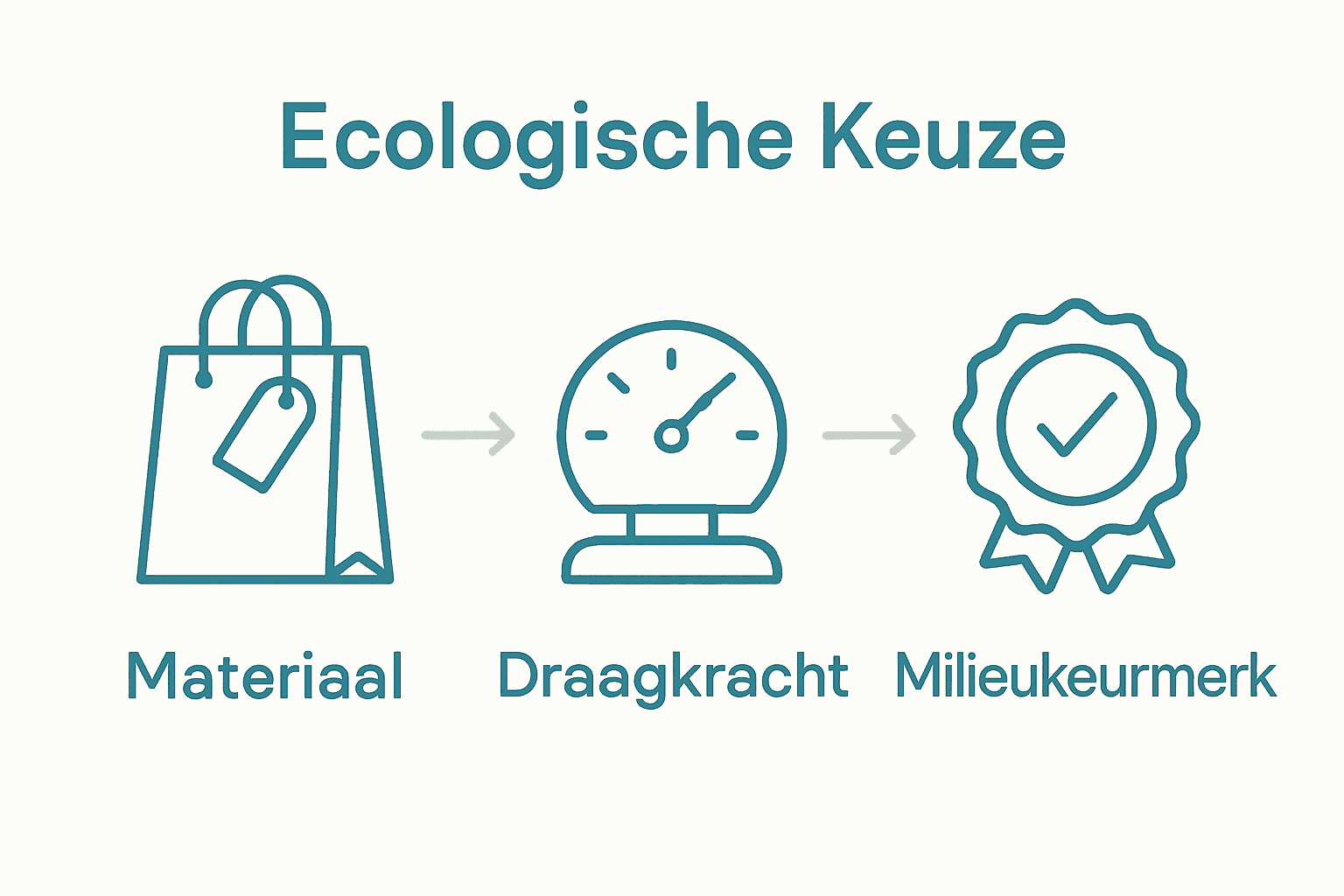
Certifications and Environmental Performance Checks
When selecting paper bags, it's crucial to thoroughly investigate their environmental performance and associated certifications.WWF emphasizes the importance of specialized labels that guarantee sustainability and ethical production processes.
Although paper bags are often seen as environmentally friendly, research by NRK shows that their environmental impact is more nuanced than often suggested. Paper bags don't outperform alternative materials for all 18 environmental impacts, underscoring the importance of critical evaluation.
When checking environmental certifications, you should pay attention to the following aspects:
- FSC certification for responsible forest management
- Percentage of recycled material
- CO2-neutral production processes
- Biodegradability
- Local production conditions
For an in-depth look at sustainable packaging choices, check out our guide to recycling packaging materials for the most up-to-date insights into eco-friendly options.
Consider Personalization and Printing
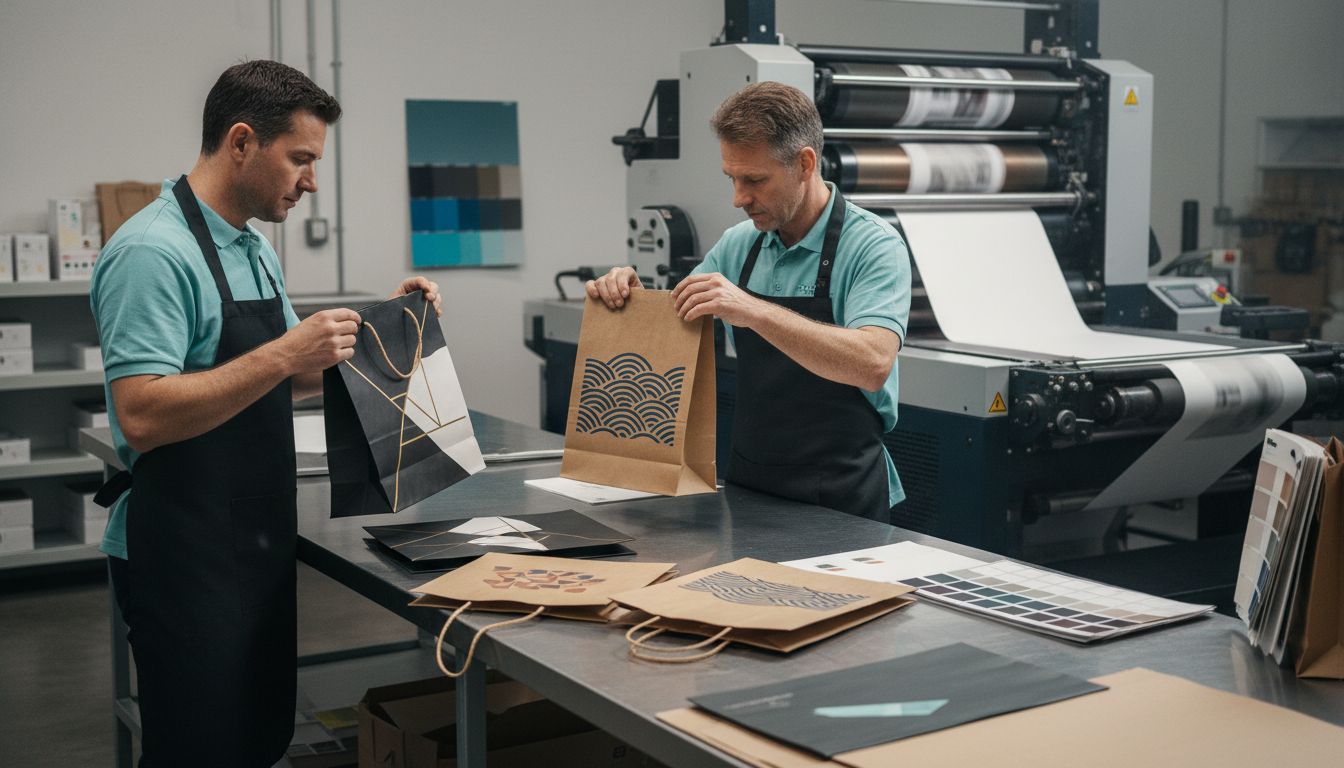
Personalizing paper bags offers a unique opportunity to differentiate your brand and convey a memorable visual message. Printing goes far beyond decorative design—it's a strategic communication tool that directly influences your company's perception and recognition.
When considering personalization, there are several printing techniques available, each with its own advantages and disadvantages. Offset printing is ideal for large print runs with detailed designs, screen printing offers maximum color depth for simple graphics, while digital printing offers flexibility for smaller, more specialized productions. The choice depends on your specific marketing goals, budget, and desired visual impact.
When selecting the right personalization method, pay attention to:
- Quality of color reproduction
- Printing technique
- Number of bags required
- Complexity of the design
- Budget per bag
- Desired sustainability characteristics
For detailed insights into customizing your packaging, check out our step-by-step guide to unique printed bags, which takes you through the entire process from design to finished product.
Weighing Costs, Risks, and Alternatives
When selecting paper bags, it's crucial to conduct a careful cost-benefit analysis that goes beyond just the initial purchase price. Total cost considerations include not only direct expenses but also indirect costs such as storage, transportation, and potential replacement costs for quality issues.
The most important risk factors to evaluate are material strength, environmental impact, production conditions, and delivery reliability. A cheap bag may seem financially attractive in the short term, but can lead to higher costs due to, for example, torn packaging, customer dissatisfaction, or repeat orders.
When weighing costs and risks, consider:
- Price per bag
- Minimum order quantity
- Quality of the material
- Lifespan of the bag
- Opportunities for reuse
- Replacement costs in case of defects
Explore our guide to the risks of cheap packaging materials for an in-depth look at the hidden costs and potential pitfalls of cheap packaging choices.
Find the perfect paper bags for your needs at Kadopapier.net
The comprehensive guide to paper bags highlights key challenges such as choosing the right material, assessing weight capacity, and verifying environmental certifications. Many entrepreneurs and creative professionals struggle to find bags that are both sustainable and functional, while also allowing them to appropriately personalize their brand. The article emphasizes essential aspects such as the importance of quality, environmental performance, and the right printing techniques for optimal weight capacity and appearance.
At Kadopapier.net, we understand these dilemmas all too well. With our extensive range of packaging materials, you can easily find paper bags that meet your specific requirements for strength, environmental sustainability, and personalization. Whether you're looking for budget kraft paper carrier bag options for everyday use or luxury printed bags to powerfully promote your brand, we can quickly and easily provide the right product.
Don't wait any longer to make a conscious choice that makes your packaging sustainable and professional. Discover our solutions now and give your business that extra touch. Visit Kadopapier.net today and transform your paper bags with ease and quality.
Frequently Asked Questions
What are the main benefits of paper bags?
Paper bags are renewable, often recyclable, and suitable for various applications such as retail and gift packaging. They are also available in various sizes and designs.
How do I choose the right materials for paper bags?
When choosing materials for paper bags, it is important to consider the origin of the material, recyclability, biodegradability, and energy and water consumption during production.
What should I know about the weight capacity of paper bags?
The load-bearing capacity of paper bags depends on factors such as wall thickness, material strength, and handle construction. A well-designed bag distributes the weight evenly to prevent tearing.
How can I get my paper bags printed?
There are several printing techniques available for printing paper bags, such as offset printing for large print runs and digital printing for smaller orders. The choice depends on your design needs and budget.
Recommendation
- The Benefits of Paper Bags: An In-Depth Understanding – Kadopapier.net
- Kadopapier.net | Wholesale Gift Wrapping Paper, Bags, and Tissue Paper
- Paper vs. Plastic Packaging: Everything You Need to Know – Kadopapier.net
- Why Use Tissue Paper: Complete Expert Guide – Kadopapier.net
- Hidalgo Bags & More | Promotional Items and Business Gifts | Shoppers with pleats, available in various sizes