


Why filler material is important for various sectors
More and more companies are choosing innovative ways to ship products safely, consciously choosing void-fill materials. Surprisingly, the right choice of material can reduce the risk of transport damage by up to 70 percent . But it's precisely the latest sustainable void-fill materials that are quietly revolutionizing packaging and logistics.
Table of contents
- What is filler material and what types are there?
- Why does void fill play a crucial role in packaging?
- How does filler material contribute to sustainability and environmental friendliness?
- What are the practical applications of filler materials in different sectors?
- Which innovations and trends will influence the future of void fill materials?
Quick Summary
| Takeaway | Explanation |
|---|---|
| Choose the right filling material | The right material minimizes transport damage and waste. |
| Use sustainable filling material | Eco-friendly options reduce companies' ecological footprint. |
| Enhance product protection during transport | Padding material absorbs shocks and prevents product damage. |
| Focus on innovations in filling materials | The use of smart technologies makes packaging more functional and sustainable. |
| Ban single-use packaging | Choose reusable or compostable materials to reduce waste. |
What is filler material and what types are there?
Cushioning materials are a crucial component of packaging and cushioning processes across various industries. These materials are used to fill spaces, protect objects, and absorb shock during transport or storage. Learn more about alternative packaging materials .
Types of Filling Material
There are different types of filler material, each with unique properties and applications:
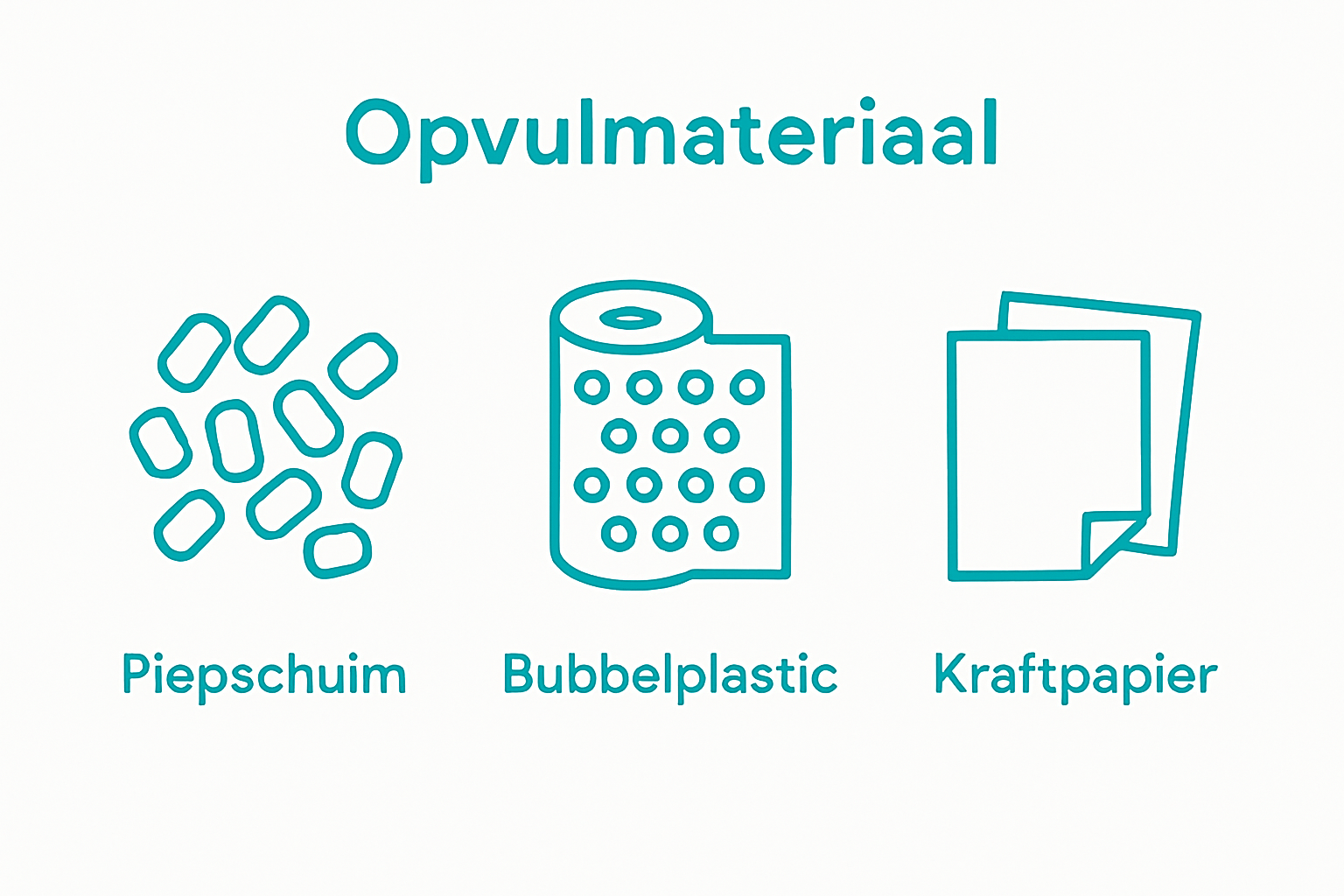
- Styrofoam : Lightweight, impact-resistant material used for delicate electronics and fragile objects
- Bubble wrap : Transparent material with air-filled bubbles that provide extra protection
- Kraft paper : Strong, recyclable material suitable for heavier products
- Foam sheets : Soft and flexible, ideal for wrapping individual items
Practical Applications
Cushioning plays a vital role in various sectors. In logistics, it protects goods from damage during transport. For online stores, it ensures that products arrive undamaged. In manufacturing, it's used to protect fragile components and fill spaces.
The choice of the right filling material depends on:
The overview below makes it easy to compare the different types of filler material, so you can quickly choose the most suitable material for your application.
| Type of Filling Material | Main Feature | Suitable Application | Sustainable / Recyclable |
|---|---|---|---|
| Styrofoam | Light and shock resistant | Vulnerable electronics, fragile | No / Limited |
| Bubble wrap | Extra protection, air cushions | Clothing, books, various sectors | Limited / Yes |
| Kraft paper | Sturdy, easily recyclable | Heavier products | Yes / Yes |
| Foam sheets | Soft, flexible, good fit | Individual, delicate items | Limited / Limited |
- Weight of the product
- Vulnerability of the article
- Transport conditions
- Environmental impact
According to research by Packaging Innovation Netherlands, the selection of suitable filling material is crucial for minimizing transport damage and reducing waste.
Why does void fill play a crucial role in packaging?
Padding forms the invisible protective layer that keeps products safe during transport, storage, and distribution. More information about packaging materials can provide insight into the complexity of this protection method.
Product Protection and Integrity
The primary purpose of cushioning is to prevent damage to fragile products. During transport, goods are exposed to numerous risks such as shock, vibration, and pressure. Cushioning acts as a shock absorber , absorbing and neutralizing these external forces. Without adequate protection, a fragile product can easily become damaged, leading to financial loss and customer dissatisfaction.
Economic and Logistical Impact
The role of void-fill material extends beyond pure protection. It plays a significant economic role in the logistics chain. Companies that use void-fill material effectively significantly reduce the costs associated with damaged goods. According to research by the European Packaging Association, correct void-fill material can reduce transport damage by up to 70%.
Important aspects of filler materials include:
- Shock absorption during transport
- Stabilization of products in packaging
- Preventing movement and friction
- Protection against moisture and external influences
Modern businesses must focus not only on protection but also on sustainability. More and more organizations are choosing eco-friendly filling materials that are recyclable or biodegradable, thus protecting their products and reducing their environmental footprint.
How does filler material contribute to sustainability and environmental friendliness?
The evolution of packing materials reflects the growing global focus on environmentally friendly solutions. Discover creative and sustainable packaging techniques that can reduce your carbon footprint.
Modern Sustainability Trends
Modern packaging materials are transforming from traditional, environmentally harmful products to innovative, recyclable alternatives. Companies are increasingly focusing on environmentally conscious packaging solutions that not only protect products but also contribute to a circular economy. Biodegradable materials such as recycled paper, natural fibers, and compostable plastics are gaining popularity.
Recycling and Circular Economy
According to research by Circonnect, material choices play a crucial role in sustainability. Modern fill materials are developed with reuse and recycling in mind. Key features include:
- Use of mono-materials for easy recycling
- Application of renewable raw materials
- Development of compostable packaging
- Reduction of single-use packaging materials
The environmental benefits of modern filler materials include more than just recyclability.
 They contribute to energy savings, reduce waste production, and support the transition to more sustainable economic practices. Through smart material choices, companies can significantly reduce their environmental impact without compromising product quality or protection.
This table provides a clear overview of how void fill materials contribute to sustainability and which characteristics are relevant for environmentally conscious packaging.
| Sustainability label | Explanation |
|---|---|
| Mono-material | Promotes easy recycling |
| Renewable raw materials | Raw materials from natural, renewable sources |
| Compostable | Material breaks down into organic matter |
| Recyclable | Can be reprocessed after use |
| Reduction of single-use | Less disposable material, more reuse |
| Energy saving | Requires less energy in production and processing |
What are the practical applications of filler materials in different sectors?
Padding is a vital component of countless industries, with each segment presenting unique applications and challenges. Learn more about tissue paper applications to gain insight into its diverse uses.
Logistics and E-commerce
In the logistics sector, cushioning plays a crucial protective role. Online stores and postal services use various types of cushioning to safely transport products. Delicate electronics are often packaged with Styrofoam or specialized foam sheets, while books and clothing are protected with kraft paper and bubble wrap. These materials absorb shock, prevent shifting during transport, and minimize the risk of damage.
Manufacturing and Industrial Sector
In manufacturing, cushioning fulfills multiple functions. Manufacturers use it not only for protection but also for stabilization and space-saving. Precision instruments, medical devices, and fragile machine parts are packaged with custom-cut foam materials that can neutralize static electricity and ensure a precise fit.
Key application areas include:
- Electronics and semiconductor industry
- Medical equipment and laboratory equipment
- Automotive parts
- Art objects and museum collections
- Food production and food packaging
According to research by TNO, modern filling materials are becoming increasingly advanced, with properties that go beyond pure protection and focus on sustainability, reusability and specific sectoral requirements.
Which innovations and trends will influence the future of void fill materials?
The world of packaging materials is on the cusp of significant technological and sustainability transformations. Discover smart applications of tissue paper to gain insight into the latest developments.
Technological Breakthroughs
Nanotechnology and biotechnology are revolutionizing the development of void fillers. Scientists are developing materials that not only protect but also possess intelligent properties. Self-healing polymers, sensor materials that detect damage, and biodegradable alternatives represent the next generation of void fillers. These innovations make packaging not only more functional but also more sustainable and environmentally friendly.
Sustainability trends
The rise of the circular economy is forcing manufacturers to fundamentally rethink their approach to filler materials. Renewable and fully recyclable materials are becoming increasingly important. Examples include bioplastics made from agricultural waste, foam materials produced from seaweed, and packaging that is fully compostable after use.
Key future developments include:
- Self-healing polymer structures
- Biodegradable nanomaterials
- Intelligent packaging with built-in sensors
- CO2-neutral production processes
- Materials based on renewable raw materials
According to research from Maastricht University, the focus in the coming years will be on developing materials that are not only functional but also fully compatible with circular economy models. The challenge lies in finding the balance between protection, sustainability, and affordability.
Make every product safe and stylish with the right filling material
Do you find that products often arrive incomplete to your customers? Or are you looking for a safe and attractive way to package gifts and delicate items? As you read in the article, good packaging is crucial for the protection and presentation of your products. Not only does it prevent damage and disappointment, it also contributes to a professional image and customer satisfaction.
Discover the versatile selection at Kadopapier.net today, allowing you to make every packaging safe and attractive. For example, browse our wide range of tissue paper for stylishly filling and protecting gift wrapping, or learn more about sustainable packaging techniques if you want to contribute to a better environment. Choose certainty and a stylish look for every shipment or gift. Your products deserve top-quality protection and a beautiful presentation.
Frequently Asked Questions
What is filler material and why is it important?
Cushioning material is essential for protecting products during transport and storage. It prevents damage from shock, vibration, and pressure, which is crucial in various sectors such as logistics and manufacturing.
What types of filler materials are there and what are the differences?
There are several types of packing materials, including Styrofoam, bubble wrap, kraft paper, and foam sheets. Styrofoam is lightweight and impact-resistant, bubble wrap provides extra protection with air bubbles, kraft paper is sturdy and recyclable, while foam sheets are soft and flexible for delicate items.
How does void fill material affect packaging sustainability?
Filling materials can be sustainable if they're made from recyclable or biodegradable materials. This contributes to a circular economy and helps companies reduce their environmental footprint.
What are the practical applications of void fill material in e-commerce?
In e-commerce, cushioning is used to protect fragile products like electronics and clothing during transport. It minimizes the risk of damage and ensures that products arrive in good condition.