


Clothing Shipping Bags: Sustainable Choices for Fashion
More and more fashion companies in Central Europe are switching to sustainable packaging. More than 60 percent of European consumers prefer eco-friendly shipping for clothing. The way clothing is packaged and shipped not only impacts a brand's image but also reduces transport costs and waste. Discover how innovative clothing shipping bags help you make environmentally conscious choices that align with efficiency and brand identity.
Table of contents
- What are clothing shipping bags?
- Different types and materials explained
- Sustainable options and environmental impact
- Efficient use, closures and return options
- Costs, risks and alternatives for clothing shipping
Key Insights
| Point | Details |
|---|---|
| Shipping bags are essential for the fashion industry | They protect clothing during transport and are crucial for functionality and durability. |
| Sustainability plays a central role | Biodegradable and recycled materials reduce the environmental footprint of shipping processes. |
| Choose the right materials and closures | Depending on shipping needs and sustainability goals, different shipping bags can be chosen. |
| Cost-benefit analysis is needed | A careful consideration of costs, risks and environmental impact is essential when choosing shipping packaging. |
What are clothing shipping bags?
Clothing shipping bags are specialized packaging solutions specifically designed for shipping clothing. These bags are more than just packaging: they protect clothing during transport and play a crucial role in the modern, sustainable fashion supply chain.
These bags are typically made from various materials such as polyethylene, kraft paper, or biodegradable components. They are designed to protect clothing from moisture, dirt, and damage during shipping. Various types of shipping bags are available, ranging from standard plastic bags to eco-friendly packaging solutions that meet modern sustainability requirements.
The importance of clothing shipping bags goes beyond pure functionality. They are a vital part of the fashion industry's logistics chain, where factors such as weight, size, protection, and environmental impact all play a role. Modern shipping bags are lightweight, compact, and can be designed with specific properties such as waterproofness, tear resistance, and transparency.
Pro tip: Choose shipping bags that are not only functional but also align with your sustainability goals and brand identity.
Different types and materials explained
Clothing mailing bags are available in a wide variety of materials, each with unique properties suitable for different shipping needs. Plastic mailing bags are the most common variety, made of polyethylene or polypropylene, which are lightweight, waterproof, and exceptionally durable.

Besides traditional plastic options, there are now also innovative packaging materials focused on sustainability. Biodegradable bags, made from materials like cornstarch or recycled plastic, are quickly gaining ground in the fashion industry. These bags offer the same protection as traditional packaging, but with a significantly lower environmental impact.
The different types of shipping bags can be categorized as follows:
- Standard plastic bags : Cheap and versatile
- Kraft paper bags : Environmentally friendly and biodegradable
- Recycled plastic bags : Sustainable and circular
- Compostable bags : Completely biodegradable
Choosing the right material depends on factors such as the weight of the clothing, transport conditions, sustainability goals, and budgetary considerations. Modern shipping solutions combine functionality with environmental responsibility.
Below is an overview of commonly used materials for shipping bags and their unique properties:
| Material type | Advantages | Typical usage scenario |
|---|---|---|
| Polyethylene plastic | Waterproof, sturdy and light | Shipments with a risk of moisture |
| Kraft paper | Environmentally friendly, recyclable | Fashion brands with an eco-focus |
| Recycled plastic | Circular, lower CO2 impact | Sustainable fashion companies |
| Biodegradable | Compostable, modern image | Eco-webshops, green campaigns |
Pro tip: Invest in shipping bags that not only protect your products but also strengthen your sustainable brand identity.
Sustainable options and environmental impact
The fashion industry faces a crucial challenge: reducing environmental impact through smart packaging choices. Sustainable packaging materials are playing an increasingly important role in reducing the ecological footprint of shipping processes.
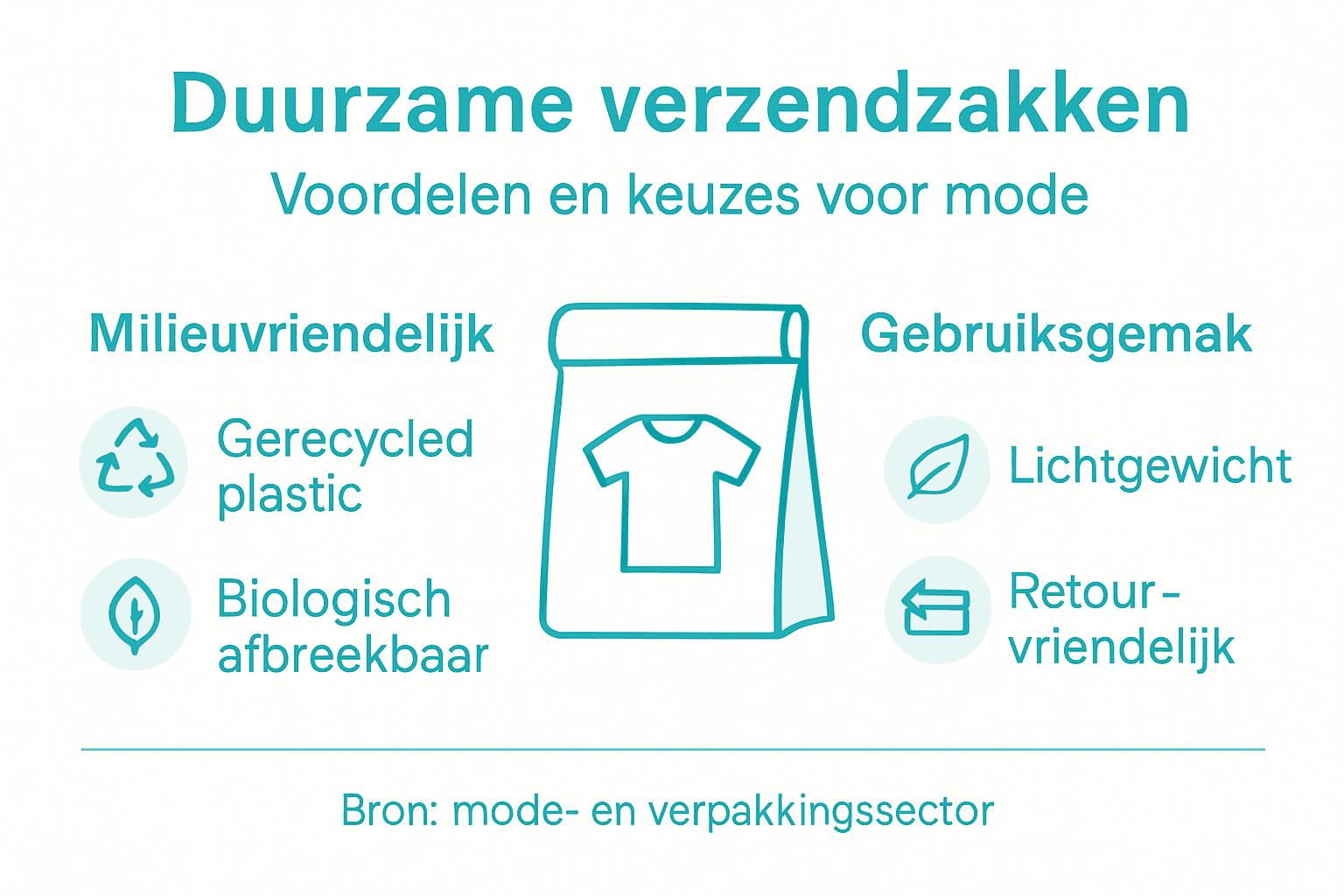
There are several environmentally friendly approaches used in the production of clothing shipping bags. Materials made from agricultural waste, such as co-ex film or recycled components, offer an innovative alternative to traditional plastic packaging. These materials have a significantly lower environmental impact and contribute to a more circular economy.
The environmental impact of shipping bags can be assessed using several criteria:
- Raw material consumption : Use of recycled or renewable materials
- Energy consumption : Production processes with lower CO2 emissions
- Waste reduction : Compostable or easily recyclable packaging
- Life cycle : Materials that can withstand multiple use cycles
Consumers and brands are becoming increasingly aware of the importance of sustainable packaging choices. By choosing lightweight, efficient materials, companies can significantly reduce their environmental impact.
Pro tip: Regularly calculate the environmental impact of your shipping packaging and actively seek out increasingly sustainable alternatives.
Efficient use, closures and return options
Fashion companies must increasingly use clothing shipping bags more intelligently, focusing on efficiency and ease of use. The use of closure stickers plays a crucial role in optimizing shipping processes.
The modern clothing mailing bag offers several technical features that improve the shipping process. Self-adhesive closures allow bags to be closed quickly and securely, while resealable strips offer multiple uses. These innovative closure methods ensure that clothing remains protected during transport and can be easily returned.
When it comes to return options, there are several strategies for efficient use:
- Pre-printed return labels : Attached directly to the shipping bag
- Double adhesive strips : Allow for multiple openings and closures
- Transparent windows : Content identification without opening
- Integrated return envelopes : Incorporated in the original packaging
Optimizing shipping bags requires a balanced approach between ease of use, sustainability, and cost-efficiency. Modern solutions combine technical innovation with environmentally conscious materials.
Pro tip: Choose shipping bags with flexible closure mechanisms that support both the initial shipment and potential returns.
Costs, risks and alternatives for clothing shipping
Choosing shipping packaging requires a careful analysis of costs, risks, and environmental impact. The risks of inexpensive packaging materials should be thoroughly evaluated before making a final decision.
Fashion companies have various shipping options available with varying cost profiles. Shipping bags are generally cheaper and lighter than boxes, which reduces shipping costs. They take up less storage space and are ideal for flexible clothing items. However, fragile or sensitive items may require more protection.
Alternatives to traditional mailing bags include:
- Letterbox packages : More protection, higher shipping costs
- Reusable packaging : Higher initial costs, lower environmental impact
- Compostable bags : More expensive, but more sustainable
- Recycled materials : Balancing costs and environmental benefits
The right choice depends on product features, shipping frequency, and sustainability goals. Modern shipping solutions combine cost-efficiency with minimal environmental impact.
The following overview shows how different clothing shipping alternatives compare:
| Packaging form | Environmental impact | Cost indication |
|---|---|---|
| Shipping bag (plastic) | Average | Low |
| Letterbox box | High | Resourse |
| Reusable packaging | Very low | High |
| Compostable bag | Low | High |
Pro tip: Calculate the total cost cycle of your packaging materials, including shipping costs, return rates, and environmental impact.
Discover sustainable shipping bags for clothing at Kadopapier.net
Looking for shipping bags that not only protect your clothes but also contribute to a greener world? Then choose the high-quality, eco-friendly packaging materials from Kadopapier.net . Our collection helps you avoid the risks of cheap packaging and consciously chooses sturdy closures that combine convenience and durability. This way, you can securely seal your clothes with functionality and respect for the environment.
Take advantage of our extensive range of shipping bags, including compostable, recycled, and kraft paper options, that perfectly align with your sustainability goals. Make the switch today and strengthen your brand identity with packaging that truly makes a difference. Visit Kadopapier.net and find the perfect shipping solutions for your clothing shipments.
Frequently Asked Questions
What are clothing shipping bags?
Clothing shipping bags are special packaging designed to safely ship clothing items. They protect the clothing from moisture, dirt, and damage during transport.
What materials are used for clothing shipping bags?
Shipping bags can be made from various materials, such as polyethylene, kraft paper, organic, and recycled components. Each material has unique properties that suit different shipping needs.
What are the benefits of sustainable shipping bags?
Sustainable shipping bags, such as biodegradable or recycled bags, have a lower environmental impact and contribute to a circular economy. They offer the same protection as traditional shipping bags, but are better for the environment.
How do I choose the right shipping bag for my clothes?
When choosing a shipping bag, consider the weight of the clothing, the transport conditions, your sustainability goals, and your budget. It's important to invest in bags that are both functional and environmentally friendly.
Recommendation
- Clothing Packaging: Complete Guide to Choosing – Kadopapier.net
- Brown Paper Bags: Sustainable Packaging for Everyone – Kadopapier.net
- Why use kraft paper bags for a sustainable choice? – Kadopapier.net
- Sustainable packaging materials: Environmental impact and regulations – Kadopapier.net
- Our Bags – House Coffee