


Recycling Packaging Materials: Complete Guide 2025
Did you know that over 60 percent of packaging waste in the Netherlands is recycled ? Yet, a lot of usable material still ends up in landfills every year. Smartly handling packaging waste makes a significant difference for the environment and preserves valuable raw materials. By understanding the correct recycling methods and materials, you can immediately contribute to less waste and a cleaner environment.
Table of contents
- What is packaging materials recycling?
- Main types of packaging materials
- How does the packaging recycling process work?
- Legislation and guidelines in Central Europe
- Responsibilities for stores and consumers
- Common mistakes and sustainable alternatives
Important Points
| Point | Details |
|---|---|
| Collection and processing | Packaging materials are collected, sorted and recycled into new products, resulting in less waste and more efficient use of materials. |
| Responsibilities | Both businesses and consumers have obligations in the recycling process, including choosing sustainable packaging and correctly separating waste. |
| Recycling cycles | The recycling process goes through several steps such as collection, sorting, cleaning and processing to obtain valuable raw materials. |
| Education and awareness | Raising awareness of the differences between recycled and recyclable materials is essential to improve recycling efficiency. |
What is Packaging Material Recycling?
Recycling packaging materials is a crucial process in which used packaging is collected, sorted, and transformed into new products. According to government research, this system contributes to more efficient use of materials and a significant reduction in environmental waste.
The recycling process involves several essential steps. First, packaging such as paper, cardboard, plastic, and metal is carefully collected by specialized waste collection services. These materials are then sorted based on their composition and quality. Afterward, they are cleaned, processed, and transformed into raw materials that can be used for new products.
The benefits of recycling packaging materials are numerous:
- Reduction of environmental impact
- Saving on raw material use
- Energy efficiency
- Limiting waste flows
Our sustainable packaging materials are a perfect example of how modern companies can contribute to a circular economy by applying smart recycling techniques.
Main Types of Packaging Materials
Packaging materials represent a diverse and complex world with different material types. According to research by the European Council, the main packaging materials are paper and cardboard (40%), plastic (19%), glass (19%), wood (17%), and metal (5%), each with unique properties and recycling potential.
Within the plastics category, there are specific types that are particularly suitable for recycling. Alternative packaging materials for various industries include materials such as PET, HDPE, PP, and PS. These plastics are widely used due to their versatility and potential for reuse in various industries.
The properties of these materials differ considerably:
Here is an overview of the most important properties per packaging material:
| Material | Key Features | Recycling options |
|---|---|---|
| Paper & cardboard | Light Renewable Easily recyclable |
Very good; easy to process |
| Plastic | Durable Light Various types |
Depending on type Special techniques required |
| Glass | Infinitely recyclable Environmentally friendly |
Highly efficient; little loss of quality |
| Wood | Strong Naturally Biodegradable |
Reusable and recyclable |
| Metal | Strong Durable High-quality recycling processes |
High recycling potential; energy saving |
- Paper and cardboard : Light, renewable, easily recyclable
- Plastic : Durable, lightweight, various recycling techniques
- Glass : Infinitely recyclable, environmentally friendly
- Metal : Strong, durable, high-quality recycling processes
It is important for companies and consumers to choose the right materials that are both functional and sustainable.
By making conscious choices, we can contribute to a more efficient recycling cycle and environmental protection.
How Does the Packaging Recycling Process Work?
The packaging recycling process is a structured approach to converting waste into valuable raw materials. According to Milieucentraal, this process requires energy, but it contributes significantly to waste reduction. Recycling is an essential part of modern waste management, transforming used materials into new products.
The recycling cycle involves several critical steps:
- Collection : Packaging waste is collected via special containers and collection points
- Sorting : Materials are sorted by type (paper, plastic, metal)
- Cleaning : Clean thoroughly to remove contamination
- Processing : Materials are reduced, melted or pressed
- Transformation : Conversion into new raw materials or products
Biodegradable packaging plays a key role in modern recycling processes, with environmentally friendly alternatives being developed. The goal is not only recycling but also reducing the overall environmental impact.
The efficiency of recycling varies by material type. Some materials, such as glass, can be recycled almost infinitely, while others, like some plastics, require more advanced processing techniques. By making conscious choices about material use and recycling, we can work together towards a more sustainable future.
Legislation and Guidelines in Central Europe
The European Union has developed a comprehensive legal framework for packaging waste and recycling. According to Europa Decentraal, the EU Packaging Directive sets clear requirements for the composition and reusability of packaging, with the primary goal of preventing and promoting reuse.
Legal responsibilities are divided among different parties:
- Manufacturers : Design of recyclable packaging
- Retailers : Responsible for sustainable packaging choices
- Consumers : Correct separation and return of packaging waste
- Governments : Enforcement and promotion of recycling policy
Packaging materials for shops and projects provide insight into the practical implementation of these guidelines. According to the Dutch government, companies and shops that sell packaged products are legally obligated to contribute to the sustainability and recycling of their packaging.
Regulations are constantly evolving, with increasingly stringent standards for environmental friendliness and circularity. Companies must not only comply with current standards but also prepare for future, even more demanding sustainability requirements.
Responsibilities for Shops and Consumers
According to the Dutch government, both retailers and consumers have crucial responsibilities in the recycling process of packaging materials. Companies are required to consider recycling and waste prevention in packaging design, which represents a fundamental shift in how products are developed and packaged.
For shops this means concrete responsibilities:
- Choosing recyclable packaging materials
- Minimizing packaging waste
- Informing customers about correct recycling
- Implementing sustainable packaging strategies
Retail packaging materials provide insight into the practical implementation of these principles. Consumers play an equally important role by correctly separating packaging, cleaning it thoroughly, and disposing of it in the appropriate waste containers.
The joint effort of stores and consumers is essential for an effective recycling cycle.
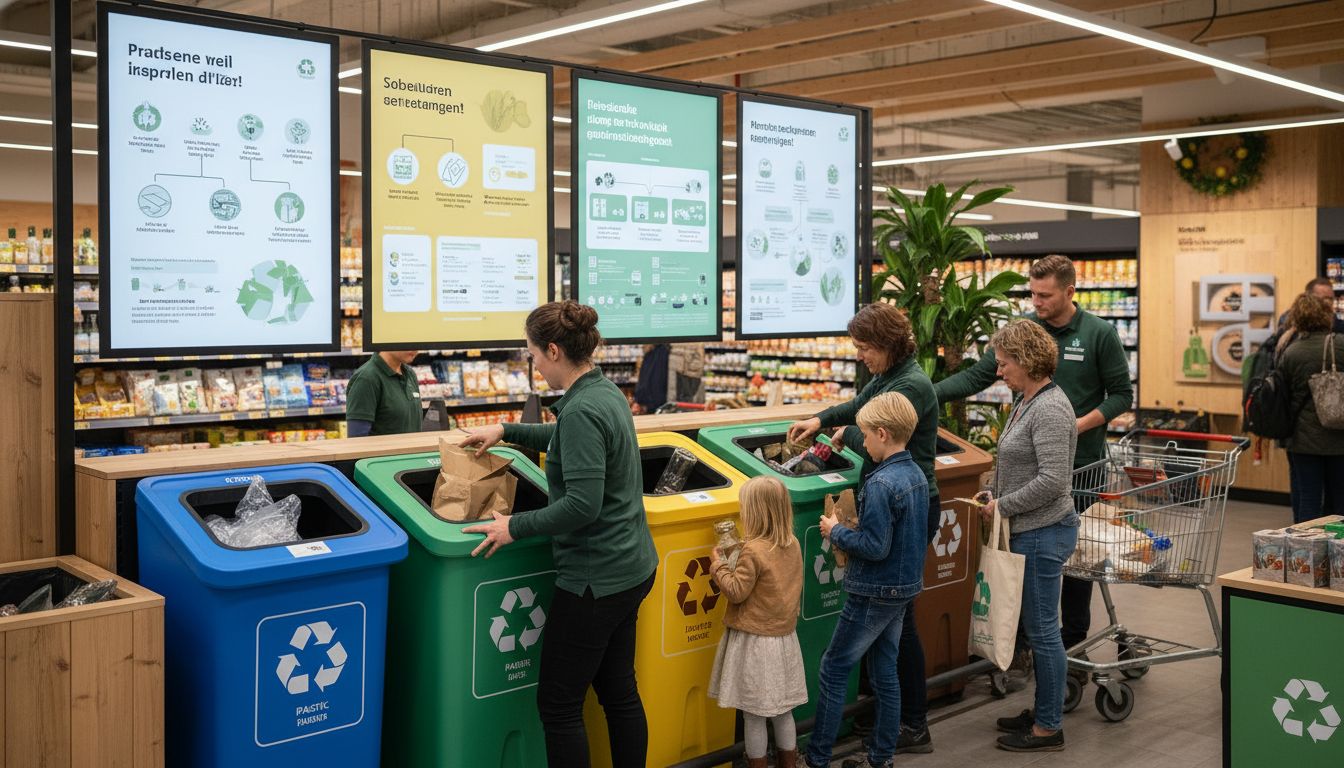 By making conscious choices and actively contributing to waste reduction, we can work together towards a more sustainable future with less environmental impact.
Common Mistakes and Sustainable Alternatives
A common mistake in packaging recycling is the confusion between recycled and recyclable packaging. According to Antalis, this confusion often leads to contamination of recycling streams, which can undermine the entire recycling process. Consumers and businesses must learn to clearly distinguish between these two concepts.
The most common recycling mistakes are:
- Careless cleaning of packaging
- Mixing different types of materials
- Incorrect sorting of packaging waste
- Ignoring local recycling guidelines
The risks of cheap packaging materials illustrate why conscious material selection is crucial. According to KoenPack, sustainable alternatives include redesigning product-packaging combinations to reduce environmental impact and using materials with a lower environmental impact.
The future of packaging revolves around smart, environmentally conscious choices. By investing in high-quality, easily recyclable materials and educating consumers, we can work together towards a more sustainable packaging industry.
Sustainable Packaging Starts With the Right Materials
Recycling packaging materials requires awareness and the right choices. The article emphasizes the importance of choosing recyclable and environmentally friendly packaging that reduces waste and enables reuse. Many companies and consumers struggle to find sustainable alternatives that are both practical and responsible. It's essential to use materials that are easily recyclable and fit within the circular economy.
At Kadopapier.net, we understand this challenge and offer a wide selection of sustainable packaging materials that perfectly comply with the latest recycling guidelines. From biodegradable wrapping paper to sturdy cardboard boxes and cheerful gift bags with an eco-conscious look, our products give you the assurance that you're not only packaging stylishly but also contributing to a cleaner future.
Switch to sustainable packaging today and make a difference . Discover our practical solutions and high-quality materials that make recycling easier. Visit our store and instantly find the packaging materials that will help your company or project achieve circular success through sustainable packaging materials and packaging materials for shops and projects. View our full range at Kadopapier.net and take the step towards responsible packaging now.
Frequently Asked Questions
What is the recycling process for packaging materials?
The recycling process for packaging materials includes steps such as collection, sorting, cleaning, processing and transformation of used materials into new raw materials.
Which types of packaging materials can be recycled?
The main packaging materials that can be recycled are paper and cardboard, plastic, glass, wood and metal, each with specific recycling options.
Why is it important to recycle packaging materials?
Recycling packaging materials is important because it reduces the environmental impact, saves raw materials and contributes to reducing waste flows.
What are common mistakes when recycling packaging?
Common mistakes include not cleaning packaging properly, mixing different types of materials, and incorrectly sorting packaging waste.