


Shipping Packages Securely for Shop Owners: A Step-by-Step Guide
Every year, shop owners in Central Europe experience how quickly the pressure mounts during the holiday season, when stacks of purchased gifts are on their way to customers. Reliable and secure shipping is more important than ever, because no one wants disappointed recipients or damaged packages. By focusing on choosing suitable packaging materials and careful shipping, you ensure that every gift arrives undamaged and on time.
Table of contents
- Step 1: Choose suitable packaging materials for your package
- Step 2: Pack products securely and protect fragile items
- Step 3: Secure the shipment with tape and clear labels
- Step 4: Check the packaging and shipping information carefully
- Step 5: Track and confirm the safe arrival of your package
Short Summary
| Important Point | Explanation |
|---|---|
| 1. Choose suitable packaging materials | Select materials that are both strong and environmentally friendly for optimal protection. |
| 2. Pack fragile items with care | Use additional protective layers to prevent damage during transport. |
| 3. Ensure secure closure and clear labeling | Use strong tape and clear labels for safe shipping. |
| 4. Check shipping information thoroughly | Please verify address and packaging information to avoid errors. |
| 5. Track shipment and confirm receipt | Monitor shipments closely and request proof of receipt. |
Step 1: Choose suitable packaging materials for your package
When shipping parcels, the choice of packaging materials is crucial for protecting your products. Selecting the right materials prevents damage and ensures a professional appearance.
Start by understanding the specific protection requirements of your products. Different items require different protection strategies. Sustainable packaging materials should not only be functional but also take environmental considerations into account. Choose materials that are sturdy enough to protect your product, but not unnecessarily heavy or expensive.
Carefully consider the properties of your packaging material. Plastic packaging, for example, can be lightweight and strong with good protective properties. When selecting your packaging, consider factors such as impact resistance, the fragility of your product, and transport conditions.
Pro tip: Always test a small batch of packaging material before placing a large order to ensure its suitability for your specific products.
Below you will find a comparison of commonly used packaging materials and their properties:
| Material | Protection | Environmental impact | Application |
|---|---|---|---|
| Cardboard | Good against shocks | Biodegradable | Universally applicable |
| Plastic | Protects against moisture | Non-biodegradable | Light and flexible |
| Foam filling | Greatly dampens shocks | Difficult to recycle | Vulnerable products |
| Paper padding | Basic protection | Environmentally friendly | Lightweight items |
Step 2: Pack products securely and protect fragile items
Properly packaging fragile items is essential to prevent damage during transport. You want to ensure your products arrive safely and undamaged.
Start by choosing suitable packaging materials for fragile items . Use additional protective materials such as bubble wrap, foam padding, or specialized cushioning materials that absorb shock. For very delicate items, it's advisable to apply multiple layers of protection to minimize movement and friction during transport.

For particularly sensitive shipments such as medical samples or delicate electronic devices, it's crucial to follow precise packaging instructions . Ensure each product is individually protected and securely fastened to prevent movement.
Pro tip: Invest in high-quality packaging materials and always test your packaging method by creating a dummy shipment that is just as heavy and fragile as your actual product.
Step 3: Secure the shipment with tape and clear labels
Properly sealing and labeling your packages is crucial for safe and professional shipping. A properly sealed and clearly marked package prevents damage and ensures smooth handling.
Use internationally recognized packaging standards for applying tape and labels. Choose sturdy, transparent packing tape that completely seals the edges and seams of the box. Use at least two to three strips of tape crisscrossed across the shipping opening to prevent the box from opening during transport.
When labeling, it's important to use clear markings that comply with international standards . Ensure your labels are large and legible, with complete shipping and return information. Always include the full name and address of the recipient and sender. Mark any fragility or special handling instructions, such as "Fragile" or "Caution," clearly on the outside of the packaging.
Pro tip: Invest in waterproof labels and use clear adhesive tape over the labels to protect them from moisture and wear during transport.
Step 4: Check the packaging and shipping information carefully
A careful final inspection is the last crucial step before your package leaves. Detailed verification prevents delays and potential shipping errors.
Consult mandatory packaging information and regulations to ensure full compliance. Systematically check all shipping information, including address, postal code, shipping instructions, and contact information. Make sure every letter and number is correct and free of typographical errors that could lead to misdelivery.
Use standardized information systems to ensure the accuracy of your packaging data. Always verify the following elements thoroughly just before shipping: the length and width of the package, the exact weight information, special handling instructions, and any vulnerability markings.
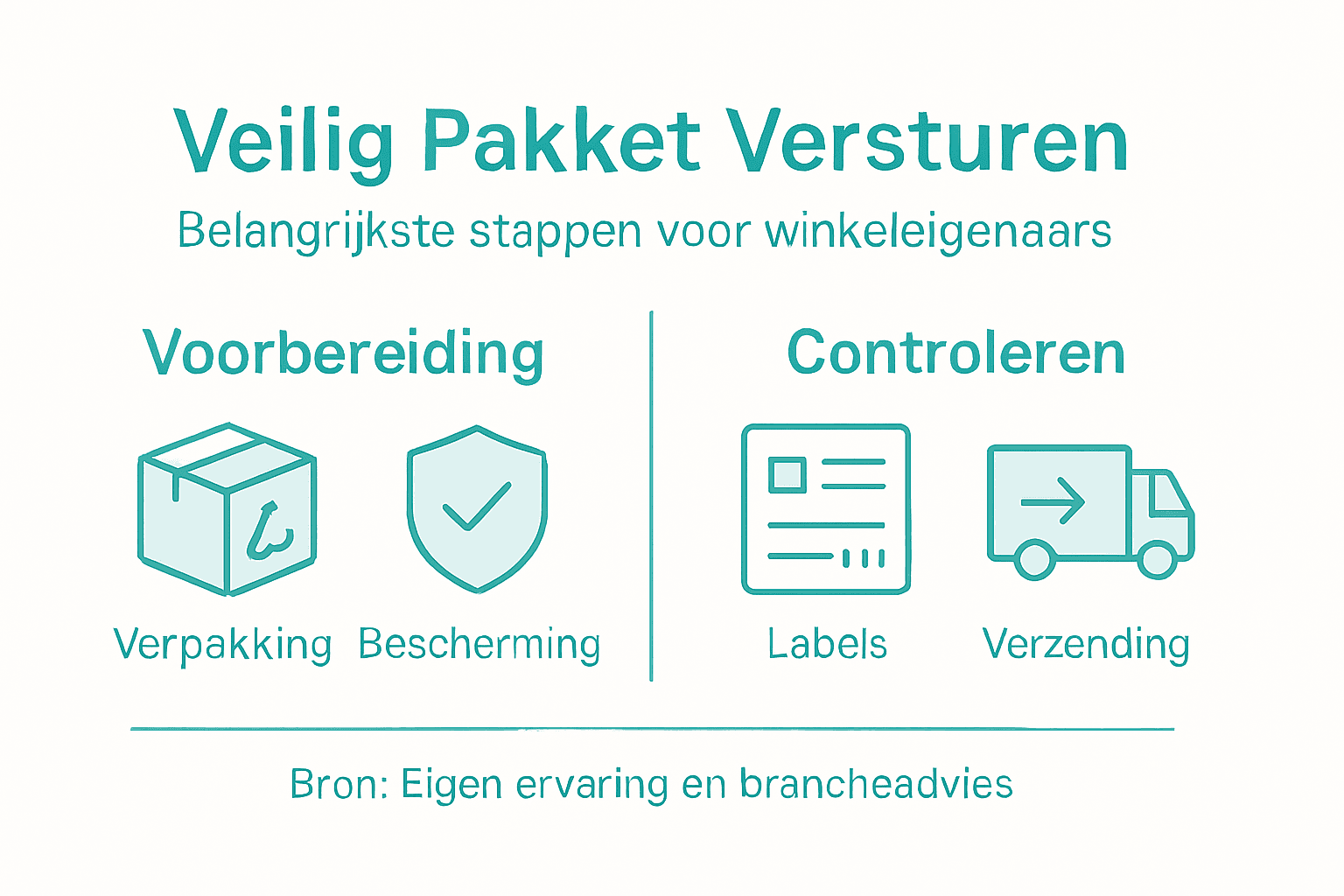
Pro tip: Develop a standard inspection checklist that you can use for every shipment to ensure nothing is overlooked.
Step 5: Track and confirm the safe arrival of your package
Monitoring your shipment is an essential part of professional parcel handling. Careful tracking helps you keep a close eye on the progress of your shipment.
Proof of receipt is crucial for store owners to minimize legal and commercial risks. Use multiple tracking methods, such as Track & Trace codes, but don't rely solely on them. Provide additional confirmation methods, such as requesting a signature upon receipt or providing detailed delivery confirmation.
If a package is unexpectedly lost, you, as the sender, are the first point of contact. Complaints about missing packages must be handled promptly and professionally. Always document the shipping information for potential claims or refunds.
Pro tip: Always keep digital and physical copies of shipping receipts and tracking information for at least six months after shipment.
This overview shows which tracking methods and receipt confirmations you can use:
| Method | Reliability | Legal value | Comments |
|---|---|---|---|
| Track & Trace code | Quickly accessible | Limited evidence | No guarantee of receipt |
| Signature upon receipt | High | Full proof | Evidence for claim |
| Delivery confirmation | Sufficient | Good | Often via email or text message |
| Proof of delivery via photo | Visual evidence | Depending on carrier | Photo shows location |
Pack your parcels with confidence and style
Shipping packages securely is a major challenge for many store owners. The article emphasizes the importance of sturdy packaging materials, properly protecting fragile products, and clear labeling to prevent damage and shipping errors. These steps ensure your customers receive their orders undamaged and enhance your reputation as a reliable business.
At Kadopapier.net, you'll find everything you need to achieve these goals. From sturdy cardboard and protective padding to high-quality tape and clear labels. Moreover, our wide selection of wrapping paper and gift bags will help you give your shipments a professional and attractive look. Don't wait any longer; browse our collection now so you can create safe and impressive packaging that your customers will truly appreciate.
Frequently Asked Questions
How do I choose the right packaging materials for my parcels?
Start by identifying the specific protection requirements of your products. Select materials that are sturdy and suitable for your items, such as cardboard for all-purpose use or plastic for moisture-resistant protection.
Which materials are most suitable for fragile items?
Use extra protective materials like bubble wrap or foam padding to protect fragile items. Be sure to apply multiple layers of protection to minimize movement and friction during transport.
How do I properly seal my packages for shipping?
Use sturdy, transparent packing tape and ensure the edges and seams of the box are properly sealed. Apply at least two or three strips of tape across the shipping opening to prevent the box from opening during transport.
What should I check before sending my package?
Check all shipping information, including address, postal code, and contact information, to prevent errors. Develop a standard checklist and always review it before shipping.
How do I track the shipment of my packages?
Use various tracking methods, such as Track & Trace codes, and request a signature upon receipt. Document all shipping information to facilitate future claims or refunds.
What should I do if my package is missing?
If a package is lost, take immediate action and document the shipping information. File a claim with the carrier and ensure you have proof of shipment for any potential claims.