


Wholesale packaging materials for the catering industry: Sustainability and practical choices
Choosing the right packaging material often makes the difference between satisfied guests and logistical headaches. For hospitality businesses in Germany, Austria, Poland, and the Czech Republic, wholesale packaging is essential for efficient service during busy events. With over 60 percent of hospitality orders in Central Europe relying on professional packaging solutions, this article shows how smart material choices can save you money, ensure food safety, and enhance your brand.
Table of contents
- What wholesale packaging materials for the catering industry entails
- Different types of packaging for the catering industry
- Sustainable and efficient material choices
- Food safety and legal requirements
- Cost structure and ordering options wholesale
- Comparing alternatives and common mistakes
Key Points
| Point | Details |
|---|---|
| Specialization in Hospitality | A wholesaler of packaging materials for the catering industry provides tailor-made packaging solutions for restaurants and catering. |
| Sustainability is Crucial | Choosing environmentally friendly and biodegradable packaging is crucial for modern hospitality businesses. |
| Food Safety and Legislation | Compliance with hygiene standards and legal requirements is essential for the protection of consumers and corporate reputation. |
| Optimize Cost Structure | Strategic purchasing through insight into the cost structure of packaging can have a significant impact on business operations. |
What wholesale packaging materials for the catering industry entails
A wholesaler of packaging materials for the hospitality industry specializes in providing professional packaging solutions specifically for restaurants, cafes, catering establishments, and other foodservice businesses. The core of this service is offering a wide and specialized range of packaging materials tailored to the unique needs of the hospitality industry.
The scope of such a wholesaler encompasses various types of packaging for different purposes, such as disposables for restaurants and catering . This means they can supply a complete package for both hot and cold dishes, including disposable containers, takeaway boxes, single-use tableware, and special packaging for transport and delivery.
The modern wholesaler of packaging materials for the hospitality industry distinguishes itself by offering more than just products. They also provide additional services such as:
- Local inventory management per location
- Support in standardizing packaging processes
- Opportunities for your own branding and corporate identity
- Advice on sustainable and environmentally friendly packaging solutions
Pro tip: Always choose a wholesaler who can flexibly adapt to the changing needs of your hospitality business and who has experience in your specific market segment.
Different types of packaging for the catering industry
Within the hospitality industry, numerous packaging types have been developed to meet the specific needs of different foodservice environments. Choosing the right packaging material is crucial for maintaining food quality, presentation, and sustainability.
A commonly used packaging option is cardboard packaging, particularly corrugated cardboard , which is characterized by its versatility and robustness. This packaging is ideal for protecting and transporting products and can be produced in various shapes, such as boxes, tubes, and die-cut sheets. It also offers printing options, making it a suitable marketing tool for hospitality businesses.
The range of packaging types for the hospitality industry is broad and diverse, as demonstrated by wholesalers in the sector . The main categories include:
- Disposable packaging for takeaway meals
- Insulated boxes for hot and cold dishes
- Cardboard and paper containers
- Plastic containers with lids
- Environmentally friendly and biodegradable packaging
When selecting packaging materials, it's essential to consider factors such as food safety, environmental impact, cost, and branding. Modern hospitality businesses are increasingly opting for solutions that are both practical and sustainable.
Pro tip: Invest in packaging materials that are not only functional but also contribute to your brand identity and sustainability ambitions.
Sustainable and efficient material choices
The modern hospitality industry faces the challenge of choosing packaging materials that are both practical and environmentally friendly. Sustainability is no longer an option, but a necessity for businesses that want to thrive in an increasingly conscious market.

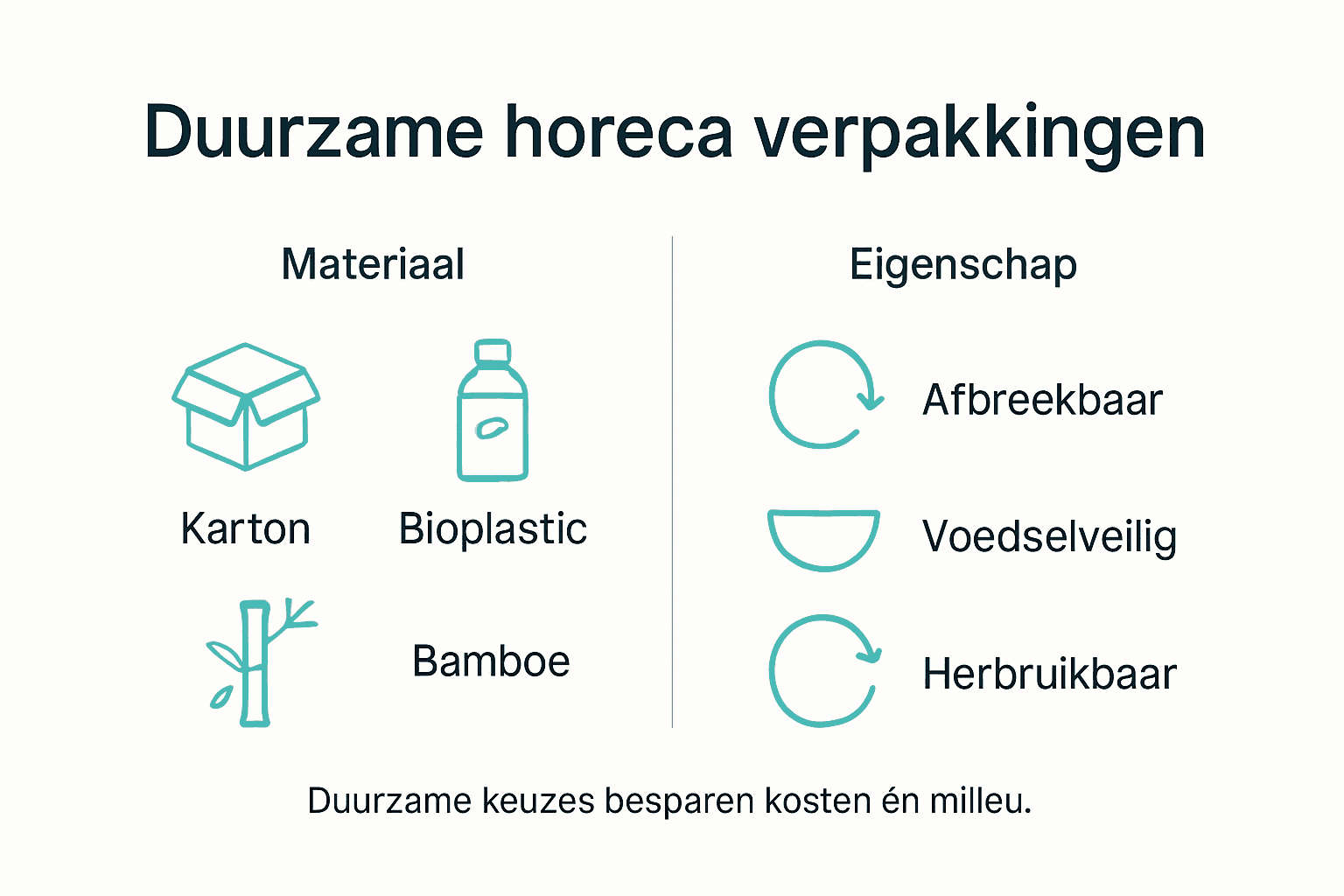
Innovative sustainable packaging solutions enable environmentally conscious choices without compromising quality and functionality. Materials like sugarcane, bamboo, recycled paper, and palm leaf now offer a robust alternative to traditional, less environmentally friendly packaging. These materials have a significantly lower impact on the climate and can help reduce the carbon footprint of hospitality businesses.
When selecting sustainable packaging materials it is important to pay attention to:
- Reusability of the material
- Biodegradability
- Production process and environmental impact
- Recyclability after use
- Long-term cost efficiency
According to research on sustainable packaging, biodegradable plastics, cardboard, and cellulose are currently the most promising materials for hospitality businesses looking to become more sustainable. These materials offer a balance between practicality and minimal environmental impact.
Pro tip: Always ask suppliers about the full environmental impact and certifications of their packaging materials before making a final choice.
Here is an overview of the most commonly used sustainable packaging materials and their properties:
| Material | Environmental performance | Catering application | Cost structure |
|---|---|---|---|
| Sugarcane | Very good, biodegradable | Suitable for hot dishes | Lower in the long term |
| Bamboo | Recyclable and strong | Serving boards, cutlery | Initially higher, sustainable |
| Recycled paper | Low CO2 emissions | Boxes, bags, napkins | Fluctuates with paper prices |
| Palm leaf | Fully compostable | Small plates, snack trays | Depending on import costs |
Food safety and legal requirements
For hospitality businesses , food safety is a critical priority, with legal requirements and hygiene standards taking center stage. Compliance with these standards is not only a legal obligation but also essential for protecting consumer health and maintaining the company's reputation.
Mandatory hygiene measures such as HACCP (Hazard Analysis and Critical Control Points) are fundamental for hospitality businesses. This system helps companies identify and manage potential risks, preventing potential health hazards and avoiding fines. It requires a systematic approach to food safety, critically evaluating every process.
European legislation imposes strict requirements on materials that come into contact with food. Packaging regulations are specifically designed to protect consumers from harmful substances and undesirable changes in food properties. This includes detailed regulations for:
- Manufacturing methods of packaging materials
- Traceability of raw materials
- Labeling requirements
- Safety standards for material use
It is crucial that hospitality businesses not only follow the letter of the law but also understand its spirit: protecting consumer safety and ensuring the highest quality standards.
Pro tip: Have regular independent audits conducted to ensure your packaging materials and food safety processes are fully compliant with current legal requirements.
Cost structure and ordering options wholesale
The cost structure of packaging materials for the hospitality industry is complex and requires a strategic approach, requiring businesses to balance quality, price, and efficiency. Understanding the various factors that influence costs is essential for a sound purchasing policy.
Wholesalers like Makro now offer advanced ordering solutions that help hospitality businesses optimize their purchasing. These platforms distinguish themselves through transparent pricing, flexible delivery options, and specific services tailored to the dynamic needs of hospitality businesses.
The main components of the cost structure include:
- Basic prices of packaging materials
- Minimum order quantities
- Transportation costs
- Seasonal price fluctuations
- Possible discounts for bulk purchases
Modern wholesalers offer various ordering options such as:
- Online stores with real-time inventory display
- Telephone order processing
- Personalized account managers
- Planned delivery times
- Inventory forecasting and management capabilities
Pro tip: Always negotiate volume discounts and discuss flexible delivery terms that fit the specific seasonal patterns of your hospitality business.
Comparing alternatives and common mistakes
When selecting packaging materials for the hospitality industry, entrepreneurs often make crucial mistakes that can have far-reaching consequences, both financially and operationally. It's essential to recognize these pitfalls and proactively avoid them.
Reusable packaging is an attractive alternative to traditional disposable packaging. This solution not only offers environmental benefits but can also be cost-effective if implemented correctly. However, many hospitality businesses struggle with the initial investment costs and complexity of the system.
The chart below summarizes the business impact of different packaging choices in the hospitality industry:
| Packaging type | Influence on brand experience | Logistical advantages | Legal points of interest |
|---|---|---|---|
| Disposable | Neutral, often generic | Simple, fast rotation | HACCP, material inspection |
| Isolated | Retains temperature longer | Remote delivery possible | Contact materials approved |
| Reusable | Sustainable image, distinctive | Lower waste volume, returns required | Additional cleaning standards |
The most common mistakes in packaging choices include:
- Focus solely on the lowest purchase price
- Not taking into account total life cycle costs
- Ignoring sustainability requirements
- Insufficient attention to hygiene standards
- Inadequate logistical support
Research into returnable packaging shows that reusable packaging can be more financially and environmentally beneficial in the long run. While the initial investment may seem higher, companies can achieve substantial savings through smart inventory management and efficient returns logistics.
Pro tip: Always calculate the Total Cost of Ownership and not just the purchase price when selecting packaging materials.
Sustainable and practical packaging solutions for your catering business
Choosing the right packaging material for the hospitality industry requires a smart combination of sustainability, food safety, and functionality. As discussed in the article, factors such as environmentally friendly materials, legal requirements, and cost structure play a significant role in the success of your packaging strategy. This can be a challenge for many hospitality businesses, requiring a reliable partner with a wide range of products and competitive prices.
At Kadopapier.net, we understand these needs and offer a wide range of high-quality, eco-friendly packaging materials perfectly suited to the hospitality industry's needs. From sturdy cardboard to biodegradable solutions and stylish packaging that enhances your brand. Also discover our practical gift bags and satin ribbons that combine versatility and quality.
Want to start benefiting from sustainable materials today without compromising convenience and style? Visit our website and experience the ease of simple ordering and lightning-fast delivery. Together, we'll make packaging a powerful part of your hospitality experience.
Frequently Asked Questions
What are sustainable packaging materials for the hospitality industry?
Sustainable packaging materials for the hospitality industry include materials like sugarcane, bamboo, recycled paper, and palm leaf. These materials are biodegradable or reusable and help reduce environmental impact.
Why is food safety important for packaging materials?
Food safety is crucial because packaging materials come into contact with food. Compliance with legal requirements and hygiene standards protects consumer health and ensures product quality.
How can I reduce the cost of packaging materials?
You can reduce packaging material costs by buying in bulk, negotiating volume discounts, and choosing reusable packaging that will save you money in the long run.
What are common mistakes when choosing packaging materials?
Common mistakes include focusing solely on the lowest purchase price, not considering total life cycle costs, and ignoring sustainability requirements and hygiene standards.
Recommendation
- Top Gift Bag Wholesale - Best Comparisons 2025 - Kadopapier.net
- Best Packaging Materials Companies – Expert Comparison 2025 – Kadopapier.net
- 7 Gift Wrapping Options for Fashion Stores – Expert Comparison 2025 – Kadopapier.net
- Top Tissue Paper for Shops – Expert Comparison 2025 – Kadopapier.net
- Batteries in good condition: Ein omfassendes Verständnis - accu.blog