


Eco Packaging Materials – Impact on Retail and Legislation
The growing mountain of waste and environmental pressure are making sustainable choices increasingly urgent for packaging professionals and retailers in Central Europe. More and more companies are consciously choosing eco-friendly packaging materials that not only produce less waste but also enable reuse and minimize CO2 emissions. Here you'll discover which innovative materials and strategies truly contribute to sustainable business operations without compromising functionality.
Table of contents
- What is eco packaging material and why now
- Main types and their uses
- New EU legislation (ppwr) as of 2026
- Responsibilities and obligations for retailers
- Alternatives, opportunities and common mistakes
Key Points
| Point | Details |
|---|---|
| Sustainability is key | Eco-friendly packaging materials are essential for reducing environmental impact and improving efficiency in retail. |
| Innovate through technology | Technological advances are enabling new forms of sustainable packaging, such as compostable and biobased materials. |
| Legislation stimulates change | The new EU regulation (PPWR) obliges companies to ensure recyclability and use of recycled materials, which has an impact on packaging strategies. |
| Strategies for retailers | Retailers need to review their packaging processes and invest in sustainability to meet emerging standards. |
What is eco packaging material and why now
Eco-friendly packaging is more than a trending concept—it's a necessary transformation in the modern retail world. Sustainable packaging is a material specifically designed to minimize environmental impact while maintaining business functionality.
These innovative materials are distinguished by their ability to reduce environmental impact . They are characterized by several key properties:
- Reusability
- Minimal CO2 emissions
- Biodegradability
- Low energy consumption during production
The urgency for eco-friendly packaging materials is driven by multiple factors. Companies are increasingly realizing that traditional packaging methods are no longer sustainable. The growing mountain of waste and increasing environmental pressure are forcing organizations to fundamentally rethink packaging design.
Technological innovations are enabling new forms of sustainable packaging. From compostable films to cleverly designed return systems, the possibilities are becoming increasingly sophisticated. Plastic alternatives with a lower environmental impact are rapidly gaining ground, supported by stricter legislation and increasing consumer awareness.
Pro tip: Choose packaging materials that are not only sustainable but also demonstrably consume fewer resources during production and transport.
Main types and their uses
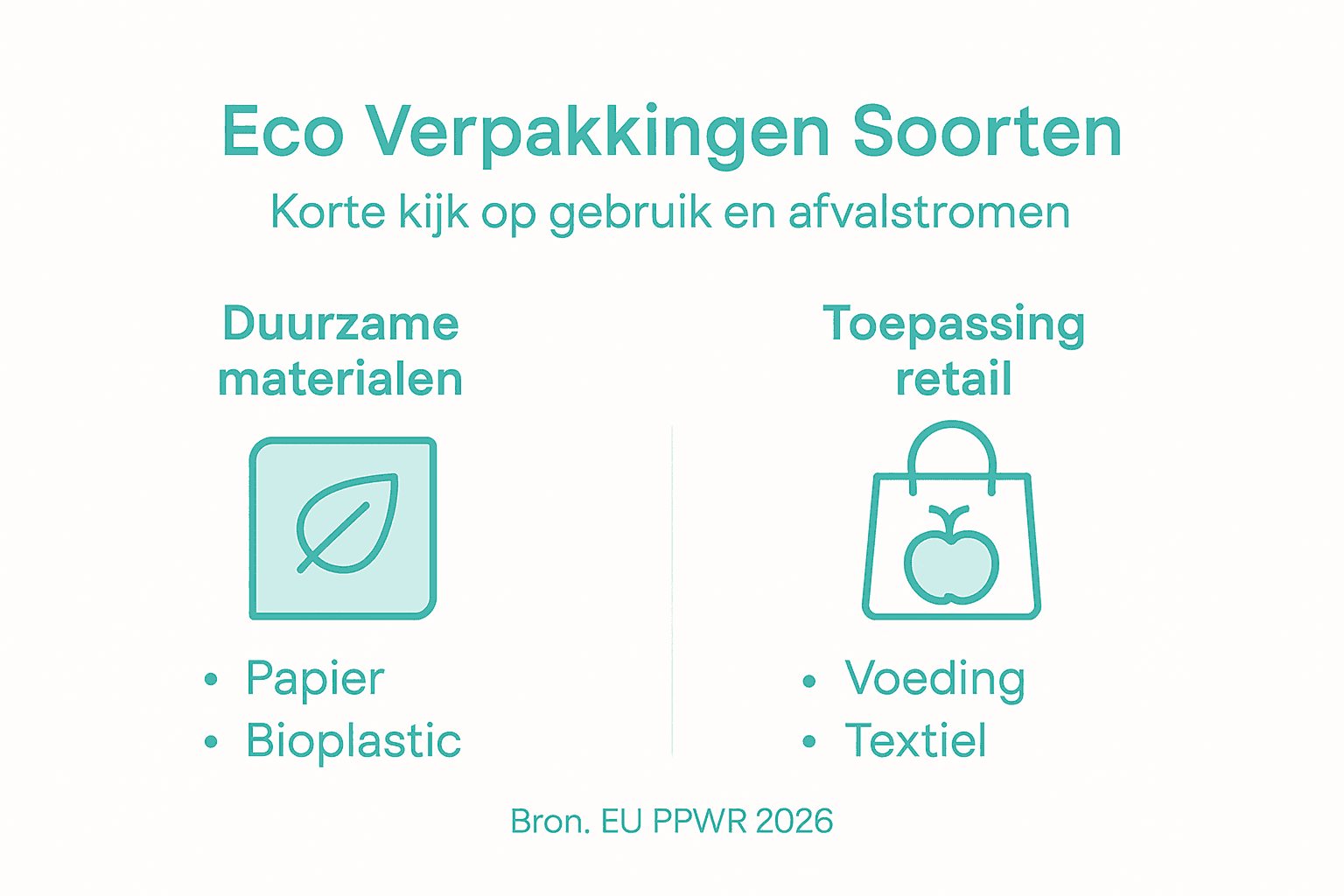
In the world of eco-friendly packaging materials, we recognize several innovative categories that are transforming the traditional packaging industry. Biobased packaging is the most promising development, based on renewable natural resources that replace fossil-based alternatives.
This category includes several species with unique properties:
- Compostable packaging : Fully biodegradable in industrial composting facilities
- Non-compostable bioplastics : Recyclable and produced from plant-based raw materials
- Barrier Packaging : Specially designed for food safety and freshness preservation
- Multi-reusable packaging : Aimed at minimal waste production
Plant-based materials offer numerous applications. They are increasingly used in sectors such as food, retail, and logistics, where the emphasis is on functional properties such as mechanical strength and minimal environmental impact.
The diversity of bio-based packaging materials necessitates complex waste management processes. Non-compostable bioplastics such as bio-PE and bio-PET are chemically identical to conventional plastics, making them perfectly recyclable within existing infrastructures.
Pro tip: Always check the specific recycling instructions for different bioplastic packaging to ensure proper waste management.
New EU legislation (PPWR) as of 2026
The Packaging and Packaging Waste Regulation (PPWR) represents a revolutionary approach to the European packaging industry. This new legislation, which comes into effect in 2026, will force fundamental changes in how companies design, produce, and manage packaging.
The main obligations of the PPWR include:
- All packaging must be recyclable by 2030
- Mandatory minimum percentages of recycled material in packaging
- Harmonization of labeling for better recycling
- Extended producer responsibility
- Limiting excess packaging materials
New packaging design requirements will force companies to critically examine their current packaging strategies. The legislation focuses not only on recycling but also on waste prevention and the promotion of circular economic models.
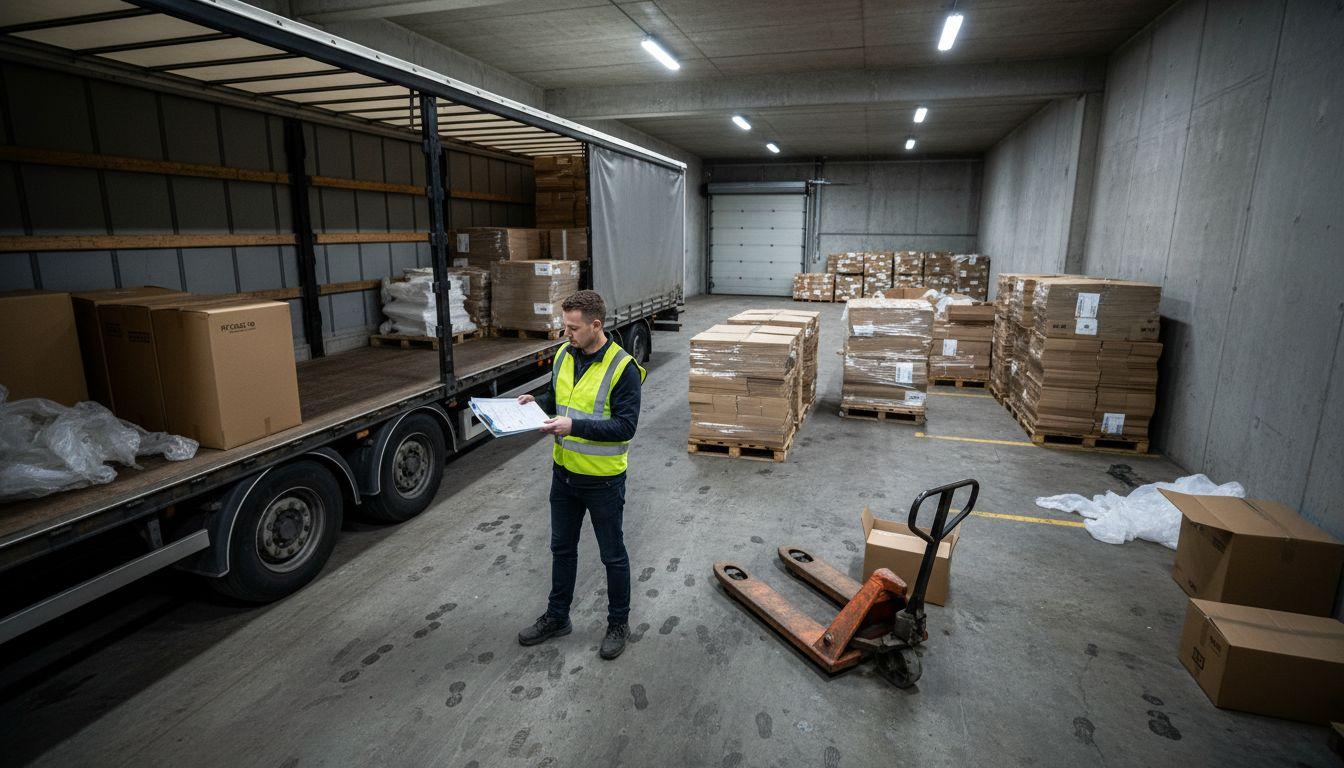
The implications for the retail sector are far-reaching.Mandatory packaging recycling means that manufacturers and retailers will have to restructure their entire supply chains to meet the new standards. This requires significant investments in sustainable packaging technologies and a complete reorganization of production processes.
Pro tip: Prepare your business by investing now in recyclable packaging materials and detailed tracking of packaging flows.
Here is an overview of the key EU legislation PPWR requirements and their implications for businesses:
| PPWR requirement | Impact on companies | Recommended strategy |
|---|---|---|
| Recyclability by 2030 | Adjust product design | Use of mono-materials |
| Minimum recycled material | Investing in new technology | Contracts with recyclers |
| Harmonization of labeling | Developing uniform labels | Collaborate with sector partners |
| Reducing excess packaging | Optimize supply chain | Redesign packaging process |
| Transparent reporting | Detailed data collection | Digital tracking systems |
Responsibilities and obligations for retailers
The new Packaging and Packaging Waste Regulation (PPWR) imposes complex but crucial responsibilities on retailers. Retailers will have to fundamentally change their packaging strategies to meet the strictest European sustainability standards.
Key obligations for retailers include:
- Demonstrating recyclability requirements for packaging
- Limiting unnecessary packaging materials
- Implementing separate waste collection
- Transparent reporting of packaging data
- Participation in producer responsibility systems
Compliance with the new packaging legislation requires a coordinated approach across the entire organization. Retailers must clearly define their role as manufacturer, importer, or distributor and understand the specific legal obligations in each European country.
Retail obligations in the circular economy go beyond simply adapting packaging. They require a fundamental rethinking of logistics processes, purchasing criteria, and waste management systems. Companies will need to invest in new technologies and partnerships to meet the new standards.
Pro tip: Start mapping your entire packaging chain now and identify potential areas for sustainability improvement early on.
Alternatives, opportunities and common mistakes
The transition to sustainable packaging materials requires a strategic and integrated approach. Companies must embrace innovative solutions that are both environmentally friendly and economically viable.
Important alternatives to traditional packaging include:
- Monomaterials (PET, PP, HDPE)
- Reusable transport packaging
- Biobased materials
- Custom packaging with minimal material use
- Modular packaging designs
Design for recycling is at the heart of modern sustainable packaging strategies. The concept focuses on designing packaging that is recyclable from the outset, thus avoiding complex separation processes.
Sustainability opportunities in packaging extend beyond just material reduction. They also include optimizing transport efficiency, improving brand perception, and reducing CO2 emissions. However, companies should avoid overestimating the sustainability of materials without a full life cycle assessment.
Pro tip: Always conduct a detailed life cycle assessment before switching to a new packaging material to identify hidden environmental impacts.
Below you'll find several alternatives to traditional packaging and their unique benefits:
| Alternative | Environmental profit | Practical application |
|---|---|---|
| Monomaterials | Simpler recycling process | Food, cosmetics, retail |
| Reusable solutions | Waste reduction, CO2 savings | Transport, e-commerce |
| Biobased materials | Reduction of fossil resources | Packaging for vegetables and fruits |
| Modular designs | Less material loss | Technical products, logistics |
| Custom packaging | Optimization of space usage | Small packages, luxury market |
Sustainable packaging solutions for future-proof retail
The challenges surrounding eco-friendly packaging materials and new European legislation demand a well-considered and immediately applicable approach. Retailers and passionate packaging users are looking not only for materials that facilitate recycling but also for options that genuinely contribute to less waste and lower CO2 emissions. At Kadopapier.net , we understand this need and offer a wide range of sustainable packaging materials that perfectly meet the demands of today and tomorrow.
Whether you're looking for biodegradable wrapping paper or sturdy kraft paper that's optimally reusable, our collection will help you implement responsible packaging solutions step by step. Ensure your packaging meets PPWR requirements and improve your environmental performance with carefully selected products that are both functional and eco-friendly. Visit Kadopapier.net today and discover how you can easily switch to sustainable packaging that's ready for the future.
Which sustainable packaging best suits your business? Browse our extensive selection and start your transition to a circular business today.
Frequently Asked Questions
What is eco packaging material?
Eco packaging materials are a sustainable alternative to traditional packaging, designed to minimize environmental impact and promote recyclability.
What types of eco packaging materials are there?
There are different types of eco packaging materials, including compostable packaging, non-compostable bioplastics, barrier packaging and multi-reusable packaging.
What are the benefits of biobased packaging?
Biobased packaging is made from renewable raw materials and offers benefits such as a reduction in fossil fuel consumption, lower CO2 emissions, and the ability to integrate recycling processes.
How does the new EU legislation (PPWR) impact the packaging industry?
The PPWR requires all packaging to be recyclable by 2030 and introduces minimum recycled content percentages, forcing companies to review their packaging strategies and invest in sustainable solutions.
Recommendation
- Lush Packaging Materials: Sustainability for Retail – Kadopapier.net
- Plastic packaging material – Sustainability and regulations – Kadopapier.net
- Sealable Plastic Bags – Efficiency and Safety for Retail – Kadopapier.net
- Sustainable packaging materials: Environmental impact and regulations – Kadopapier.net
- Packaging Best Practices for Reliable Ecommerce Shipping - ORNER